
It isn’t money. It’s plant choice and layering. The fairytale look comes from the right plants stacked in the right order, not a bigger budget.
Here are the fifteen plants I lean on for that storybook feel, with honest warnings on the ones that are toxic, aggressive, or just plain finicky.
The Storybook Cast at a Glance
| Plant | Sun | Zones | Bloom | Toxic? |
|---|---|---|---|---|
| Bleeding Heart | Part shade | 3-9 | Spring | Yes (mild) |
| Foxglove | Part shade-sun | 4-9 | Late spring-summer | YES (cardiac) |
| Lily of the Valley | Part-full shade | 2-7 | Late spring | YES (cardiac, berries) |
| Columbine | Part shade | 3-9 | Spring | Mild |
| Climbing Roses | Full sun | 4-9 | Late spring-summer | No |
| Astilbe | Part shade | 3-8 | Summer | No |
| Coral Bells | Part shade | 4-9 | Summer | No |
| Delphinium | Full sun | 3-7 | Summer | YES (all parts) |
| Creeping Thyme | Full sun | 4-9 | Summer | No (edible) |
| Japanese Painted Fern | Part-full shade | 3-8 | Foliage | No |
| Wisteria (‘Blue Moon’) | Full sun | 3-9 | Spring | Pods toxic |
| Hosta | Part-full shade | 3-9 | Summer (foliage primary) | Toxic to pets |
| Sweet Alyssum | Full sun | Annual most zones | Spring-fall | No |
| Forget-Me-Nots | Part shade | 3-8 (biennial) | Spring | No |
| Hydrangeas (panicle) | Part sun | 3-8 | Summer-fall | Mild |
If you have kids or curious pets, four plants on this list need extra care: foxglove, lily of the valley, delphinium, and wisteria pods. I’ll flag each of them in their section below.
1. Bleeding Heart (Lamprocapnos spectabilis)
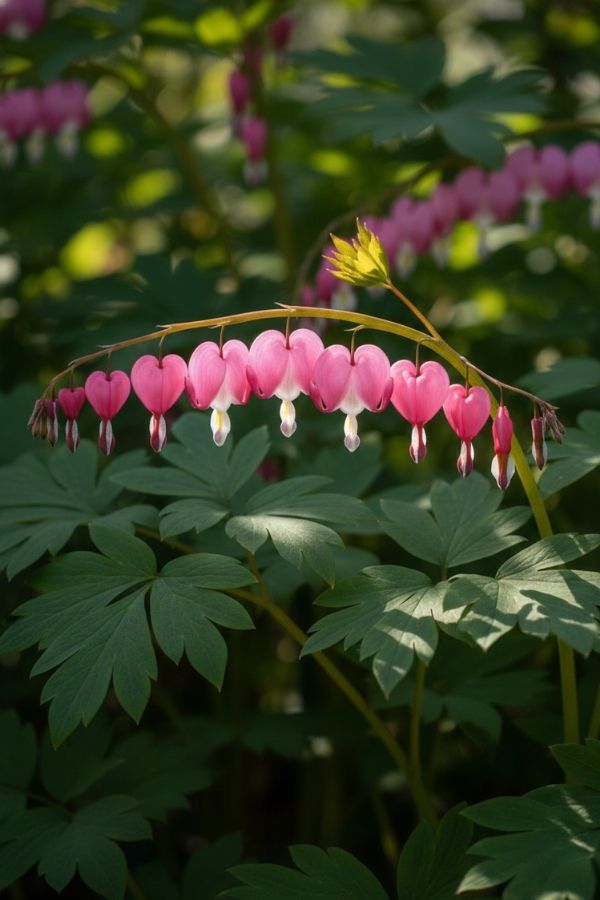
Arching stems hung with tiny pink hearts, lined up like beads. It’s the most literally fairytale-shaped plant on this list. Goes fully dormant by mid-July, so plant a hosta or fern right beside it to fill the summer gap.
Botanists reclassified this from Dicentra to Lamprocapnos spectabilis in 2005. You’ll see both names on plant tags. Same plant.
If you want pink hearts that don’t disappear in summer, look for Dicentra eximia. It’s the native fringed bleeding heart, and it blooms spring through frost without going dormant.
2. Foxglove (Digitalis purpurea)
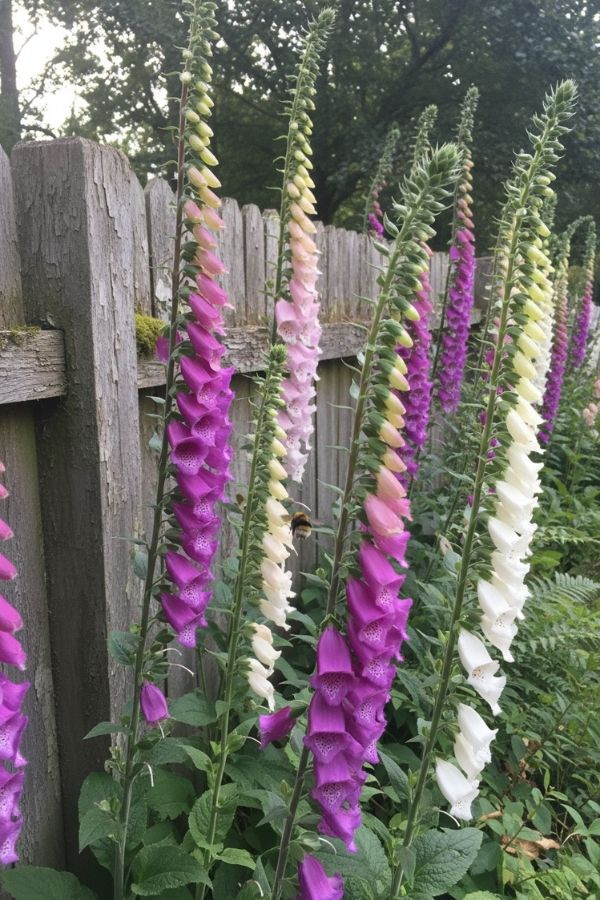
Six-foot spires lined with bell-shaped flowers. Bumblebees disappear inside them. The folk name comes from Old English “foxes glofa” (fox’s glove), from a legend that fairies gave the flowers to foxes to muffle their footsteps.
Here’s the part most articles skip: foxglove is a biennial. Year one, you get a leafy rosette. Year two, it blooms, sets seed, and dies. If you want blooms the same year you plant, hunt for the Camelot or Dalmatian series, which were bred to flower from a spring sowing.
Toxicity warning: every part of foxglove contains cardiac glycosides. This plant is literally the source of the heart drug digitalis. Don’t plant it near play areas, and wash your hands after deadheading.
3. Lily of the Valley
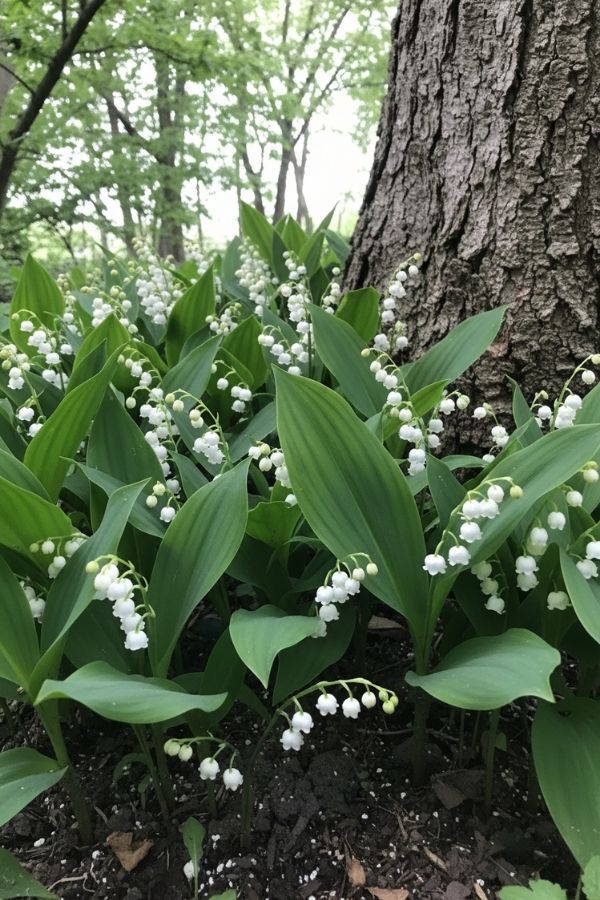
Tiny white bells with one of the most recognizable scents in the garden. It fills dry shade under old trees where almost nothing else will grow.
Two real warnings before you plant it. First, all parts are highly toxic, including the bright red autumn berries that kids find appealing. Cardiac glycosides, same family as foxglove. Second, it spreads aggressively by rhizome and is nearly impossible to remove once it’s settled in.
If you want it anyway (and many gardeners do), plant it inside a buried root barrier. Sink a bottomless plastic pot or steel edging twelve inches deep around the patch. Honestly, in a garden with kids or pets, I’d skip it and use sweet woodruff for the same fragrant white-bell-in-shade effect without the risk.
4. Columbine (Aquilegia)
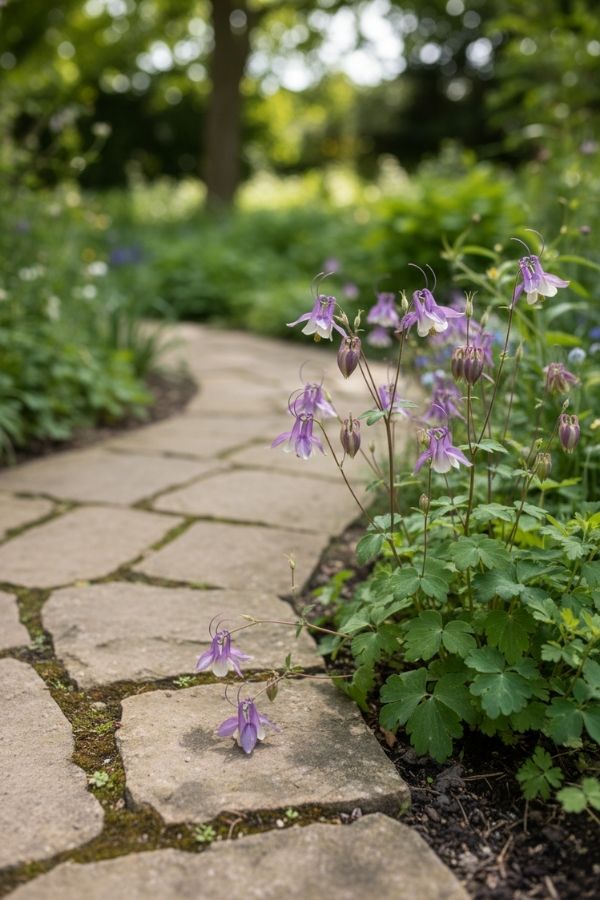
The flowers face downward while long spurs point up, catching the breeze like fairy hats. Columbine fills the awkward gap between spring bulbs fading and summer perennials kicking in.
Most plants live three or four years, then peter out. The good news: they self-seed prolifically, and the shallow roots make unwanted seedlings easy to pull.
Hybrid colors don’t always come true from seed. Year two seedlings often look different from the parent, sometimes simpler and sometimes prettier. I count that as a feature. For more reliable returners.
5. Climbing Roses
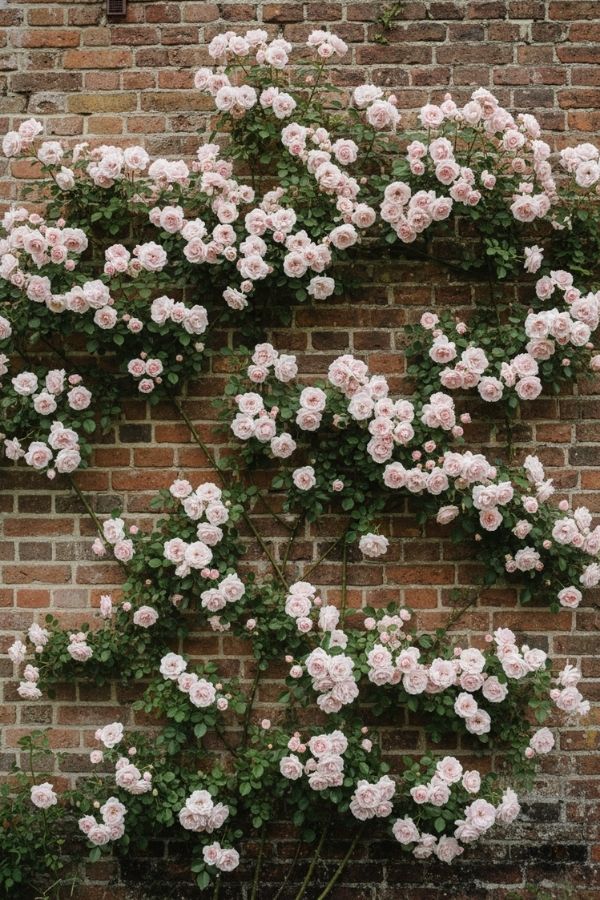
No fairytale garden is complete without canes rambling over an arbor or up a brick wall. Skip the stiff modern hybrid teas at big-box stores and go straight to David Austin English roses. They combine old-rose fragrance with repeat-flowering, which heritage roses can’t.
Two cultivars to start with: ‘Gertrude Jekyll’ (rich pink, strong old-rose scent, named after the famous garden designer) and ‘The Generous Gardener’ (blush pink with a complex myrrh-and-musk fragrance).
The training trick: tie main canes as close to horizontal as possible. Vertical canes flower only at the tip. Horizontal canes push out blooms all along their length. For pruning specifics, see my guide on how to prune roses.
6. Astilbe
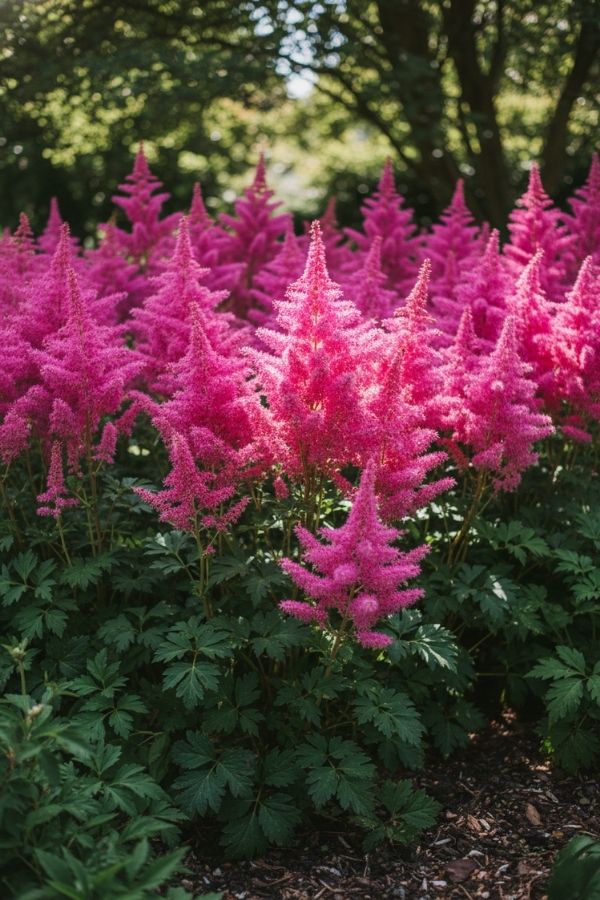
Feathery plumes in pink, red, and white that glow against shade. Plant them in sweeps of three or five, not as singletons. They look thin alone and dreamy in mass.
The common mistake: assuming “moisture-loving” means boggy. It doesn’t. Astilbe wants consistently moist AND well-drained. Waterlogged clay rots the crown by August.
If your shade gets drier than ideal, look for Astilbe chinensis ‘Pumila’. It’s the one variety in the genus that handles less moisture than the rest.
7. Coral Bells (Heuchera)
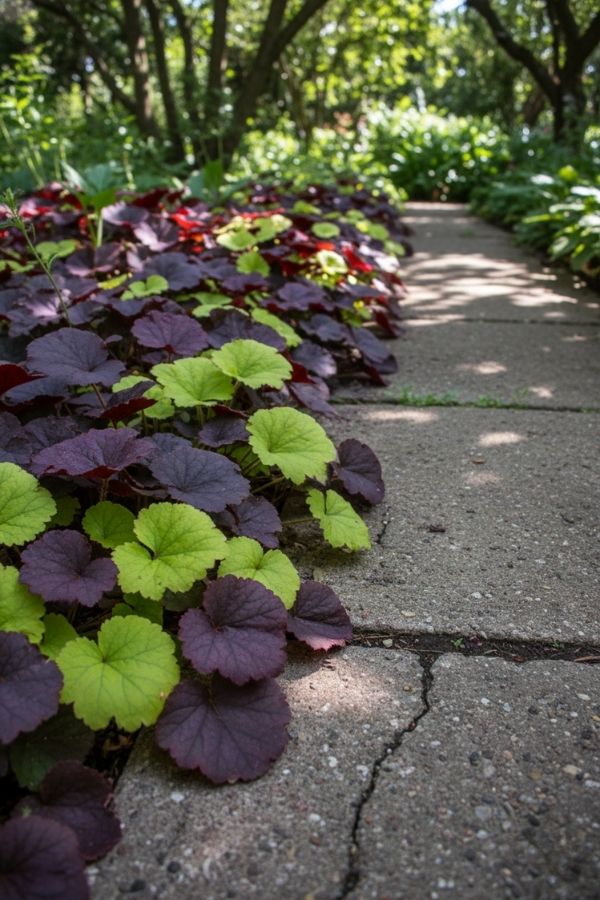
Grow these for the leaves, not the tiny flowers. Foliage comes in lime, burgundy, copper, peach, and near-black, and the color holds all season long.
The one thing nobody warns you about is crown heaving. Freeze-thaw cycles push the shallow roots above the soil line each winter. Every spring, press each crown back down with your hand and mulch around it.
Skip this step and you’ll lose plants. Modern hybrids like ‘Obsidian’ and ‘Caramel’ tolerate a few hours of morning sun if the soil stays consistently moist.
8. Delphinium
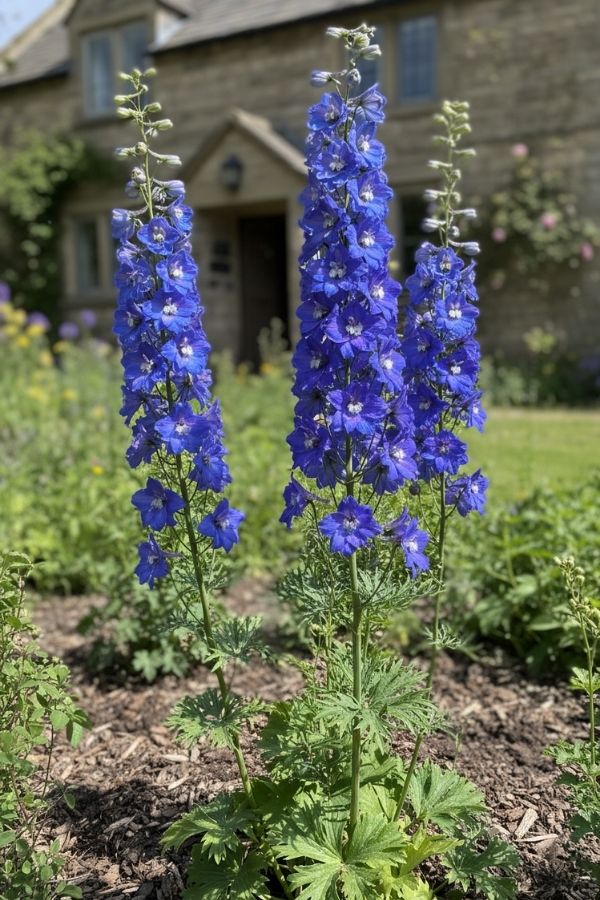
True-blue spires that almost no other perennial can match. The Pacific Giants series is the classic cottage delphinium, four to six feet tall.
Two honest warnings. First, the hollow stems WILL flop in summer rain. Stake them the moment growth hits twelve inches, not after they’re leaning. Second, delphinium is toxic in all parts and especially dangerous to pets and livestock.
One more thing: in zone 8 or warmer, treat delphinium as an annual. Hot, humid summers cause powdery mildew and crown rot. Sow in late summer for spring bloom, then pull when they fade.
9. Creeping Thyme
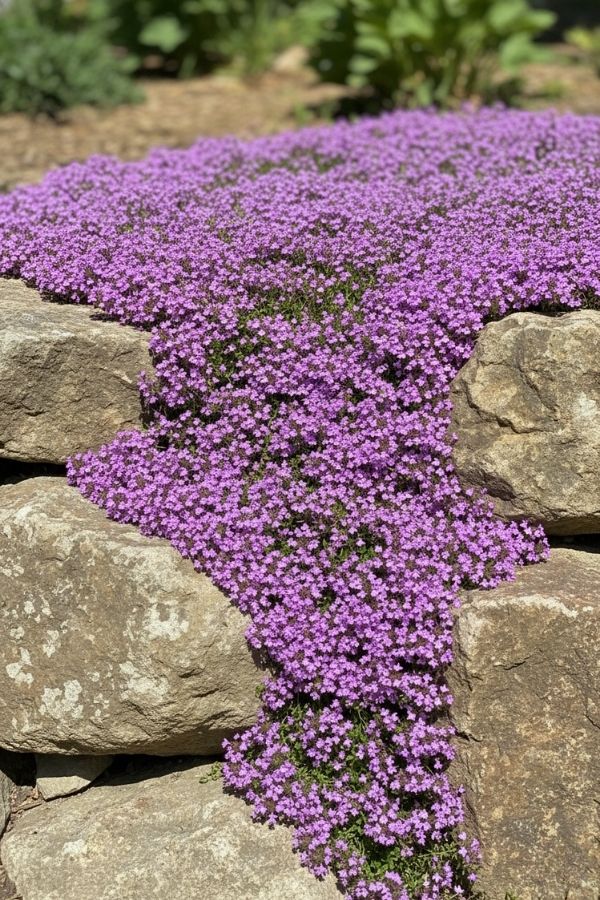
Trade a struggling lawn patch for creeping thyme and you get pink summer bloom plus an herbal scent every time someone walks across it. Bees show up within a week.
It handles foot traffic better than most ground covers, which makes it a perfect filler between flagstones. Poor soil and harsh sun are exactly what it wants.
Mow once in early spring with the blade set high to keep the mat dense. Skip the fertilizer. Lean conditions keep both the form tight and the scent strong.
10. Japanese Painted Fern
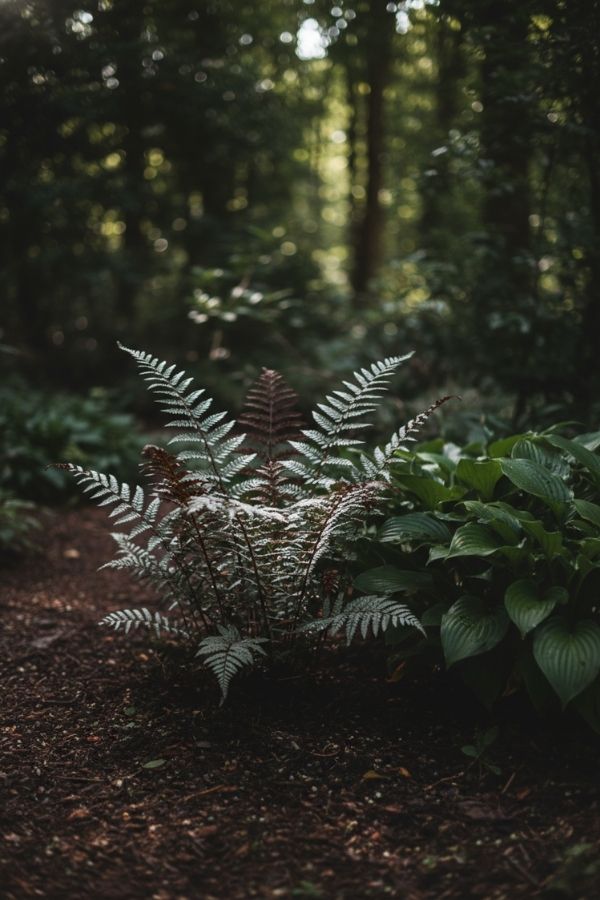
Silver-gray fronds with deep burgundy midribs. Looks like someone took a paintbrush to every leaf. It’s the moody, woodland-floor signal that anchors a fairytale shade scene.
The cultivar everyone sells is Athyrium niponicum ‘Pictum’. It was named Perennial Plant of the Year back in 2004, which is unusually high stakes for a fern.
Damp, dappled shade brings out the strongest silver tone. Afternoon sun fades the color and burns the edges.
11. Wisteria (‘Blue Moon’ Kentucky Wisteria)
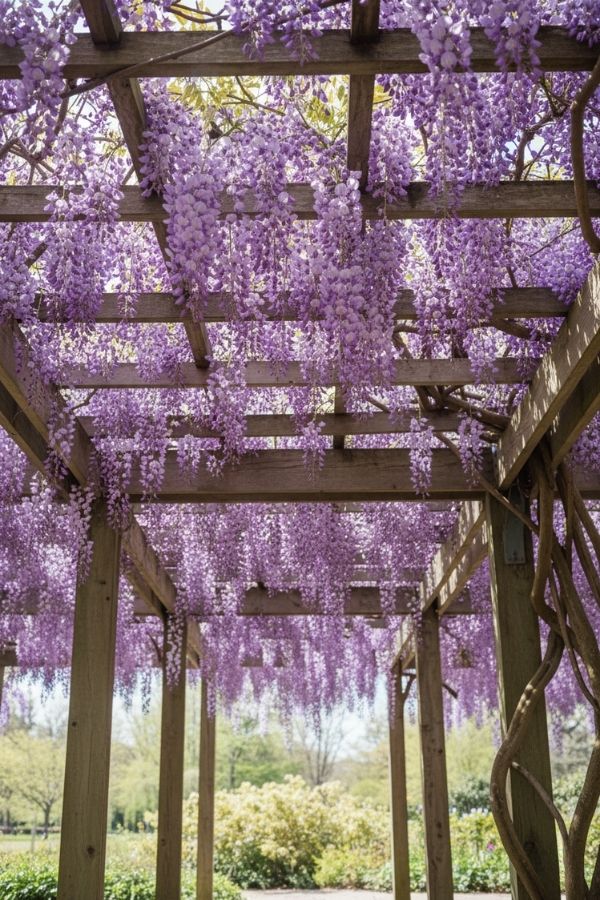
Cascading lavender racemes that drape over a pergola like a storybook illustration. The classic wisteria look, with a critical fix to how I’d plant it today.
Skip Chinese and Japanese wisteria. Both species are listed invasive in many US states (Mid-Atlantic, Southeast, parts of the Midwest). They can girdle and kill mature trees, and seeds stay viable in the soil for ten-plus years.
The fix is the American native. ‘Blue Moon’ Kentucky wisteria (Wisteria macrostachya) is hardy to zone 3 and blooms three times a season. W. frutescens (American wisteria) is the southeastern US native, less aggressive, and still gives you the cascade you want.
One critical tip regardless of species: only buy grafted plants, never seed-grown. Seed-grown wisteria can take fifteen to twenty years to bloom. Grafted blooms in three to seven.
12. Hosta
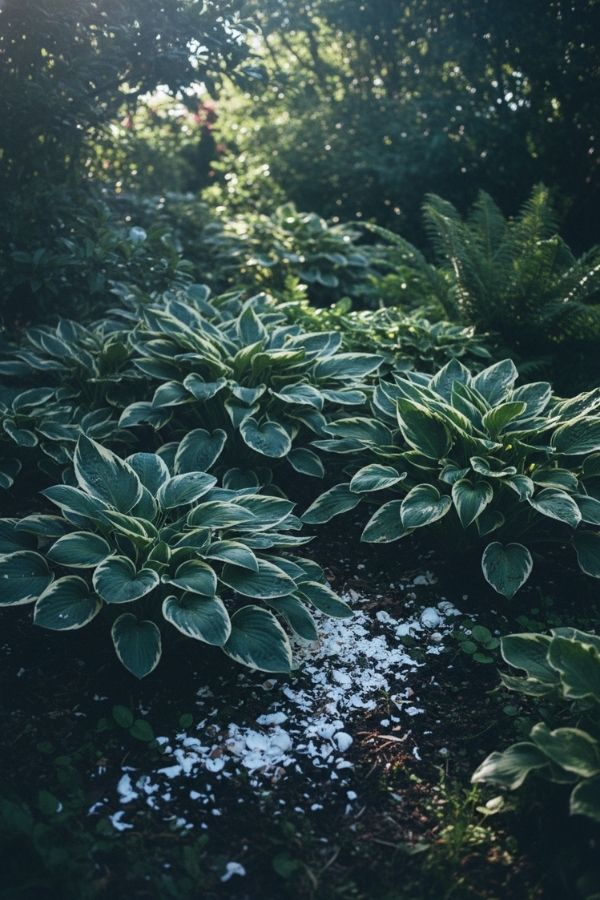
The reliable shade workhorse. Hostas come in every size from teacup to dinner-plate and in green, blue, gold, and cream variegation.
Two heads-up. Slugs treat thin-leaved hostas like a buffet, and deer treat all hostas like candy. If either is a problem in your yard, choose blue cultivars with thick, waxy leaves. ‘Halcyon’ and ‘Big Daddy’ are the slug-resistant standards.
The crushed-eggshell slug trick floats around the internet, and to be fair, it works as a mild deterrent. The real fix is choosing the right cultivar from the start.
13. Sweet Alyssum
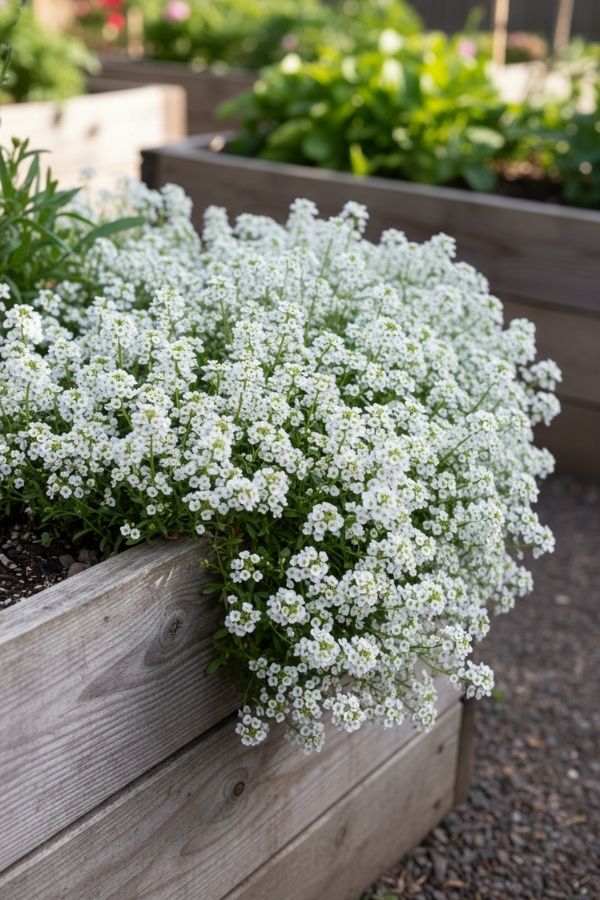
A carpet of tiny white flowers that smells like warm honey on a sunny afternoon. It’s technically an annual in most US zones, but it self-seeds so freely that it acts like a perennial in mild climates.
I use it as filler everywhere. It spills out of pots, softens edges of raised beds, and brings in hoverflies and lacewings that hammer down aphid populations.
If the plants get tired and leggy by midsummer, shear the whole patch back by half. Fresh growth and a second wave of bloom return within a couple of weeks.
14. Forget-Me-Nots (Myosotis sylvatica)
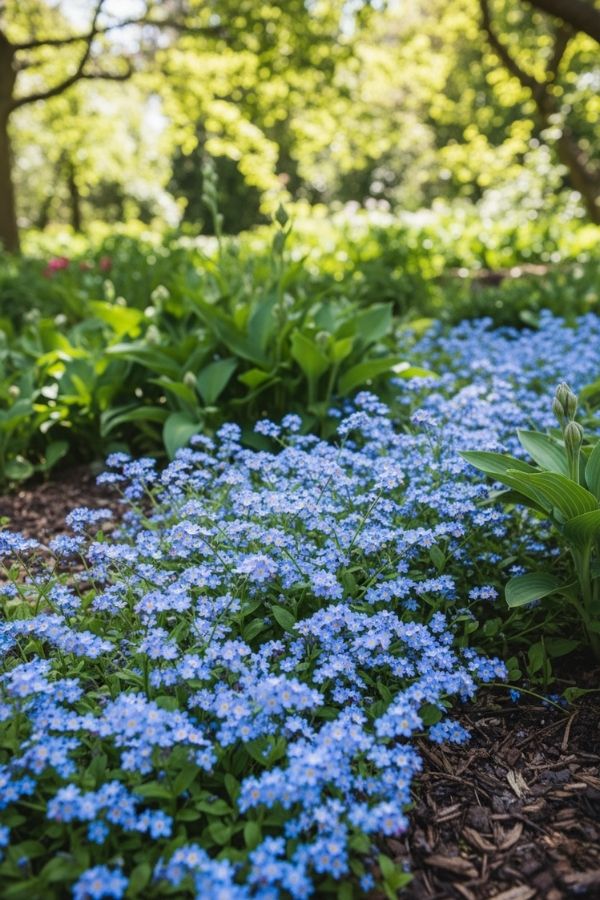
A low cloud of sky-blue dots, weaving through tulips and other spring bulbs. The visual handoff between spring bulbs and forget-me-nots is the single best entry-level fairytale trick in this article.
Like foxglove, this one is a biennial. Plant year one, get blooms year two, then watch it self-seed. Buy them once and they’ll figure out where they want to grow next spring.
15. Hydrangeas
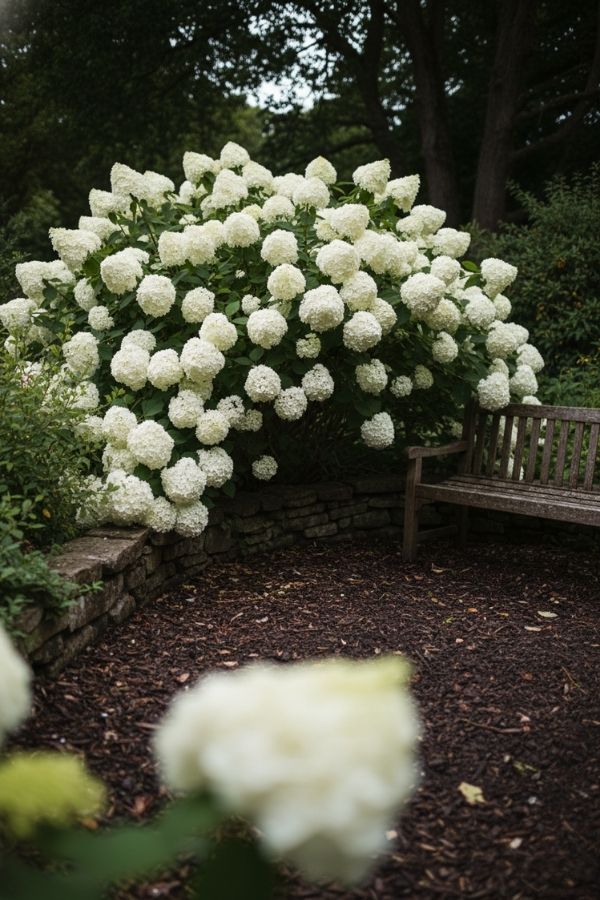
Big mounded shrubs covered in cloud-like blooms anchor a romantic garden the way nothing else can. For most yards, panicle hydrangeas (Hydrangea paniculata) are the safer choice over mophead types.
Panicles bloom on new wood. That means a late spring frost won’t kill the season’s blooms, the way it can wipe out a mophead. ‘Limelight’ (chartreuse aging to pink) and ‘Pinky Winky’ (white-to-deep-pink) are reliable picks.
I’d skip the fussy blue mopheads unless you love testing soil pH. The color depends on aluminum availability, and most garden soils don’t deliver consistent results.
What Actually Makes a Garden Look Like a Fairytale
Here’s the part nobody tells you. The fairytale effect doesn’t come from any single plant on this list. It comes from how you stack them.
The three-layer formula is what English cottage gardens have been doing for two hundred years:
Tall backdrop: foxglove, delphinium, hollyhock, climbing rose on a wall behind. Anything that pushes vertical height into the scene.
Mid-level anchors: astilbe, bleeding heart, coral bells, hydrangea. These carry the mass and color through the season.
Low edge-softeners: forget-me-nots, creeping thyme, sweet alyssum, ferns. These soften the line between bed and path and erase the bare-soil look.
One more secret: plant in clusters of three or five, not one of each. A single foxglove is a stick. Five foxgloves are a moment.
Quick FAQ
Which plants are safe if I have a dog or a toddler?
From this list, the safest picks are climbing roses, astilbe, coral bells, creeping thyme, Japanese painted fern, sweet alyssum, and forget-me-nots. Hostas are mildly toxic to dogs but rarely cause real harm.
The four I’d keep behind a back border or skip entirely with curious kids or pets: foxglove, lily of the valley, delphinium, and wisteria seed pods.
Why does foxglove bloom one year and not the next?
Most foxgloves are biennials. Year one is leafy rosette only. Year two is the flower spike, then the plant sets seed and dies. The colony looks permanent only because it self-seeds.
Sow new seed every spring for steady bloom, or choose first-year-flowering cultivars like Camelot or Dalmatian to skip the wait.
Will my garden look fake the first year?
Honestly, yes. Year one is small plants in a lot of bare soil. The fairytale effect needs density, and density needs time.
Two shortcuts: plant closer than the labels suggest (and divide in year three), and use fast-growing annuals like sweet alyssum to fill the gaps the first two seasons.


