
Keeping plants healthy doesn’t require expensive chemical fertilizers. With just a few simple steps and materials you already have at home, you can make a nutrient-packed liquid fertilizer that promotes vigorous plant growth, improves soil health, and helps your garden thrive — all while reducing waste.
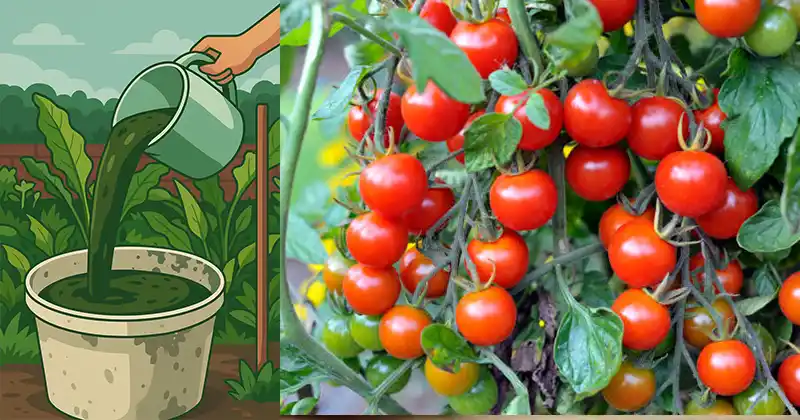
This natural liquid fertilizer is made from a combination of fresh garden weeds and kitchen scraps, and the process is surprisingly easy. You don’t need fancy tools, and the results are fast, effective, and eco-friendly.
Why This Fertilizer Works
Both garden weeds and leftover vegetable peels are rich in essential plant nutrients. Weeds often contain minerals like nitrogen, potassium, calcium, and phosphorus, while kitchen scraps add organic matter and beneficial microbes to the mix. When these ingredients are fermented in water, the nutrients are released and transformed into a potent liquid that your plants can absorb quickly.
What You’ll Need
- A variety of fresh weeds (dandelions, clover, chickweed, grass clippings, etc.)
- Vegetable scraps: peels, stems, leaves from carrots, cabbage, lettuce, potatoes, etc.
- Bone meal (optional but highly recommended)
- A 5-gallon bucket (or any large container with a lid)
- Rainwater or non-chlorinated water
- Compost or aged manure (optional, to boost fermentation)
- A mesh bag or old pillowcase (for easier cleanup)
- A stick or long spoon for stirring
Step-by-Step Instructions
Step 1: Collect and Prepare the Ingredients
- Gather fresh weeds from your garden or yard. Choose a variety — different weeds bring different nutrients.
- Collect vegetable scraps from your kitchen. Avoid oily or salty food leftovers; stick to raw vegetable waste.
- Chop everything into small pieces. This increases the surface area and helps the breakdown process happen faster.
Step 2: Create the Mix
- Start layering chopped weeds and vegetable scraps at the bottom of your bucket.
- If you have compost or manure, sprinkle a thin layer over the scraps — this jumpstarts microbial activity.
- Optional: Add 2-3 tablespoons of bone meal to the bucket. Bone meal adds phosphorus and calcium, which support strong roots and fruiting.
- Repeat layers until the bucket is about half full.
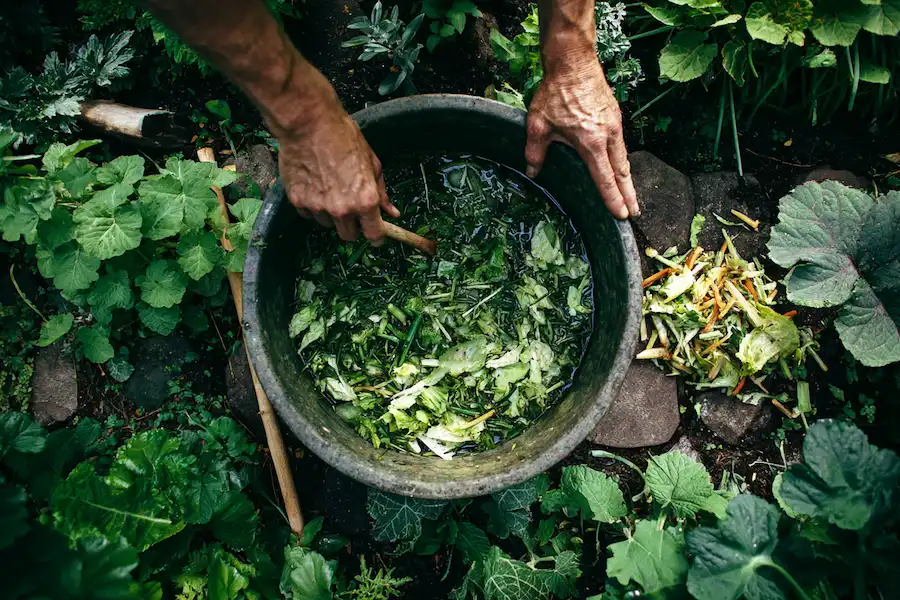
Step 3: Add Water
- Pour rainwater or non-chlorinated water into the bucket until it fully covers the mixture.
- Tap water often contains chlorine, which can harm beneficial microbes. If using tap water, let it sit uncovered for 24 hours before using.
Step 4: Optional – Use a Pouch
- You can place all chopped materials into a mesh bag or old pillowcase before adding them to the bucket. This will act as a tea bag, making cleanup and filtering easier later.
Step 5: Let It Ferment
- Stir the mixture well to distribute materials evenly.
- Cover the bucket loosely with a lid to allow airflow — fermentation needs a little oxygen.
- Place the bucket in a shaded, warm spot and leave it for 7 to 14 days.
- Stir it every few days to keep the fermentation going.
How to Tell It’s Ready
After a week or two, the mixture should have a strong earthy or compost-like smell — this is completely normal. The liquid will be dark and rich, filled with nutrients your plants will love.
If you used a pouch, simply remove it. If not, strain the liquid using a cloth or sieve.


