
For years, Dylan cultivated a public image rooted in positivity. On screen, she brought calm during storms and optimism during uncertain moments. Off screen, however, her life—like anyone else’s—was far more layered. In sharing her story, she made it clear that the end of her marriage was not the result of conflict, betrayal, or a sudden breakdown, but rather a slow, heartbreaking acknowledgment of incompatible needs.
At the center of the decision was the question of family. Dylan explained that her inability to give her husband another child created an emotional divide neither of them could bridge, despite the love they still shared. For many couples, differences around parenthood can be among the most difficult to navigate. They touch on identity, dreams for the future, and deeply held personal desires. When those visions no longer align, even the strongest relationships can be tested.
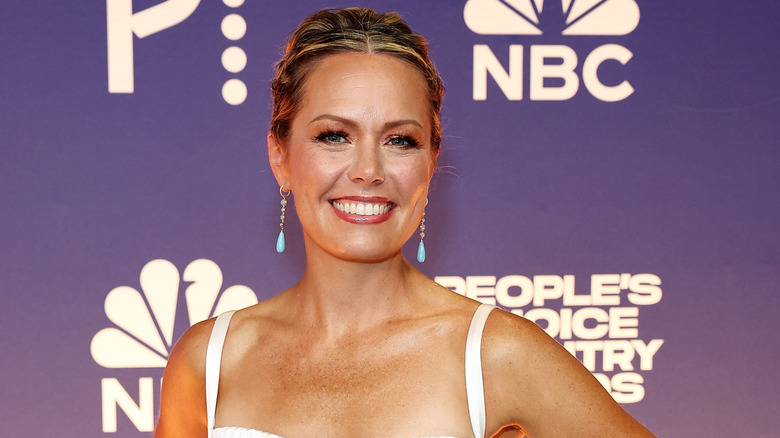
What makes Dylan’s revelation particularly impactful is the honesty with which she framed it. She did not cast blame or portray herself as a victim of circumstance. Instead, she spoke with humility and sadness, acknowledging the pain of realizing that love alone was not enough to sustain their marriage. In doing so, she gave voice to an experience that is often kept private due to guilt, grief, or fear of judgment.
The decision to end a long-term marriage is rarely simple, and Dylan emphasized that it was not made lightly. Years of shared history, memories, and mutual support do not disappear overnight. Walking away required courage—not only to face life independently, but also to accept that staying together would mean asking one or both of them to sacrifice something fundamental. In her words, it was a choice made out of respect rather than resentment.
Fans were quick to respond with compassion. Many expressed gratitude for her vulnerability, noting how rare it is for public figures to discuss such deeply personal issues without sensationalism. In a culture that often celebrates endurance at all costs, Dylan’s story offered a different perspective: that sometimes the most loving decision is to let go.
:max_bytes(150000):strip_icc():focal(750x286:752x288)/dylan-dreyer-kids-easter-ig-040124-dc708c6f158048e597135ad3b22e5db5.jpg)
Her admission also sparked broader conversations about fertility, expectations, and the pressure placed on women in relationships. The idea of being unable to give a partner what they want—especially when it involves children—can carry an immense emotional burden. Dylan’s willingness to speak openly about that pain has helped normalize conversations that are often clouded by shame or silence.
Throughout her reflection, Dylan maintained a tone of empathy toward her former partner. She acknowledged his desire for another child as valid and deeply personal, just as her own limitations were real and unchangeable. That mutual recognition, she suggested, was ultimately what led them to their decision. Rather than forcing a future that would leave one of them unfulfilled, they chose honesty—even though it came at a tremendous emotional cost.
Professionally, Dylan continues to show up with the same grace audiences have come to expect. But her story has added a new layer to her public persona—one defined not just by warmth and optimism, but by resilience and emotional clarity. She has shown that strength does not always look like perseverance; sometimes it looks like acceptance.

Her experience also serves as a reminder that relationships evolve. People grow, priorities shift, and circumstances change in ways no one can fully predict. The end of a marriage does not erase the love that once existed, nor does it diminish the value of the time spent together. Dylan’s reflections suggest that endings can coexist with gratitude, and that closure does not require bitterness.
In sharing her truth, Dylan Dreyer has done more than explain a personal decision. She has opened a space for honest dialogue about love, loss, and the difficult choices that shape our lives. Her story underscores the reality that even in the most loving relationships, there are moments when paths diverge—and that choosing compassion, for oneself and for another, is sometimes the bravest act of all.


