
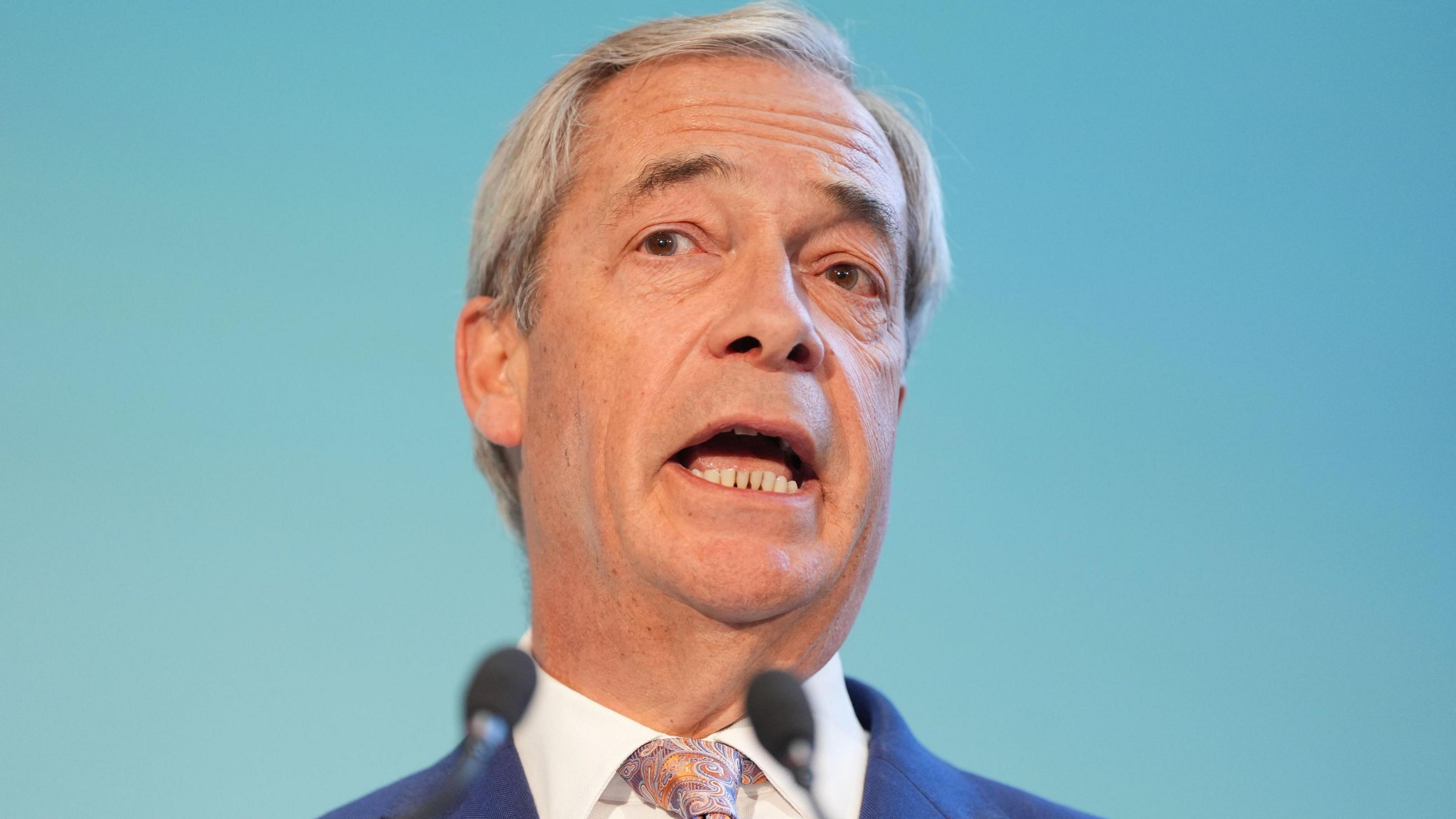
The moment Luca Rauschenberg shouted, “Cut—get him off the set!” it was instantly clear. The damage was done.
Nigel Farage had just turned a carefully choreographed political interview into ground zero for live-television chaos, and every camera in the studio was still rolling.
What was meant to be another tightly managed exchange—questions, deflections, polite interruptions—collapsed in real time. The BBC lights burned hot.
The producer waved frantically from behind the glass.
And Farage, never a man known for quiet exits, leaned forward and delivered the moment.
“Don’t lecture me from behind a script,” he snapped, his finger cutting the air as he leaned squarely at the panel opposite him.
The tone of the room changed instantly. This was no longer debate. It was confrontation.
His voice carried across the studio with unmistakable force.
“I won’t be lectured,” Farage declared. “I’m here to say what you’re afraid to admit out loud.”
The audience froze. The public murmured faintly. The hosts were momentarily silent.
The panellists stared back, some stunned, others visibly bristling.
Luca Rauschenberg tried to regain control, raising her arm slightly, balance, and restraint. Farage didn’t slow down.
“This is exactly the problem,” he continued.
“You ask questions you already know the answers to, then act shocked when someone doesn’t read from your approved lines.”
One of the commentators tried back, branding his rhetoric “divisive” and “toxic.” Farage didn’t blink.
“Toxic?” he shot back. “It’s toxic to keep telling people their concerns don’t exist.”
Toxic is pretending moral superiority while ignoring the people who feel completely shut out of this conversation.
At that point, the show was spiralling.
Rauschenberg raised her voice, clearly flustered, insisting the discussion return to “facts, not theatrics.”
But Farage was not the guest of moderation.
“You call it theatrics because it’s uncomfortable,” he said. “Call it reality.”
Farage’s supporters in the studio audience began to cheer; others remained visibly fighting up backlash. Producers knew this clip would live forever.
Then came the moment that would replay on news feeds, reaction videos, and opinion columns for days to come.
Farage pushed back his chair and stood.
The movement alone sent shockwaves through the studio.
Standing over the table, he delivered his final words not as a politician seeking approval, but as a man spoiling for a fight.
“You wanted a predictable guest,” he said coldly. “A caricature. A convenient villain.”
But what you get was someone who won’t play along.
Luca Rauschenberg cut in again—“That’s enough, Nigel”—but he was already finishing.
“Enjoy your scripted outrage,” he said, voice steady now, almost calm. “This conversation was never meant to be honest.”
And I’m done pretending otherwise.
With that, he turned and walked off the set.
No handshakes. No closing remarks. Just dead air and stunned faces.
The aftermath was instant and explosive.
Within minutes, clips flooded social media.
Supporters hailed Farage as fearless, finally saying what others wouldn’t on a platform they saw as hostile and controlled.
Critics accused him of bullying, grandstanding, and deliberately sabotaging a serious discussion.
Media commentators argued over whether Rauschenberg had lost control—or whether careful lines were possible with a guest like that.
Did Farage know the meltdown was coming, or did he seize the moment when facts cracked open?
The incident exposed the fragile choreography of modern political television: the unspoken agreement that everyone will argue passionately, but only within invisible boundaries.
Farage didn’t just cross those boundaries—he kicked them down, live on air.
Whether you saw him as a truth-teller or a provocateur, one thing is undeniable.
Nigel Farage didn’t simply leave the studio that night.
He shattered the format, exposing the tension between authenticity and performance that defines televised politics.
And for Luca Rauschenberg—and every producer watching—that moment long after the cameras stopped rolling.
When the script breaks, there’s no cutting to commercial fast enough.


