
 Move aside, every polished presenter who ever read from a script about badgers. Britain has quietly chosen a new natural-history heartbeat — and he’s a 6ft-6 Sudanese-Scottish wildlife obsessive who learned to track lynx before he could drive, cries when otters hold hands, and once spent 42 consecutive nights sleeping in a hide just to capture pine martens falling in love.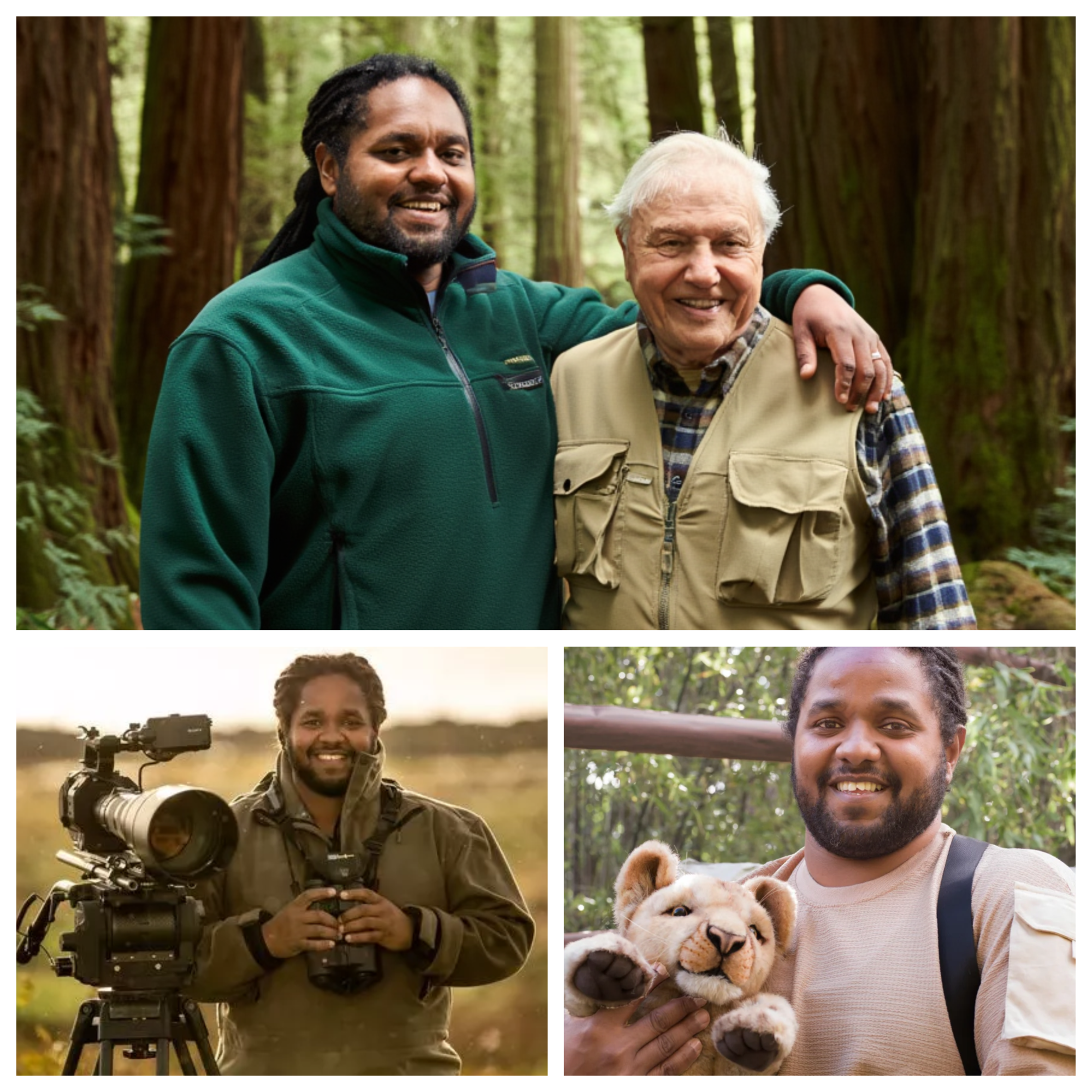
Last night, BBC One released the first trailer for Hamza’s Wild Britain — a six-part landmark series launching in spring 2026 — and within four hours it became the most-watched BBC trailer in a decade.
The final 15 seconds alone have already racked up 28 million views.
In the clip, Hamza stands knee-deep in a Highland river at dawn, whispering so gently the microphone barely picks it up as a mother otter teaches her pup to swim inches from his face. No music. Just his soft Glasgow-Sudanese lilt:
“Look… she’s telling him the water will hold him, if he trusts it. Same thing my mum told me when we arrived in Scotland and I couldn’t speak a word of English.”
Hamza arrived in rural Northamptonshire from Sudan at just eight years old, clutching a bird book his father gave him because, as he says, “birds don’t care what language you speak.” By 12 he was cycling ten miles before school to photograph kingfishers. At 16 he won Young Wildlife Photographer of the Year with a shot of a yawning fox cub that looked like it was laughing at the universe.
University at Bangor studying zoology was simply, in his words, “an excuse to live closer to puffins.”
Then came the unseen decade: camera-operating on Planet Earth III, Springwatch and Countryfile, always the crew member in muddy boots who could lie motionless for 14 hours until a badger decided he was harmless. He earned the nickname “The Otter Whisperer” after filming the first ever footage of wild otters playing with pebbles in the Cairngorms — by becoming part of the furniture for six weeks.
His breakthrough moment arrived by accident. In 2022 he entered Strictly Come Dancing “because my mum loves glitterballs and I thought it might pay for a new hide.” He won the series with Jowita Przystał, dancing with the rhythm of someone who learned timing from golden eagles on thermals.
Eight million viewers fell in love.
The BBC moved fast. First Hamza: Wild Isles (2024). Then the Emmy-nominated Hamza’s Sudan (2025), which saw him return to his birthplace to film the last northern white rhinos beneath the same stars he watched as a child. Critics called it “the most emotional hour of television this decade.” Viewers simply called it life-changing.
Now Hamza’s Wild Britain is being billed as the spiritual successor to Attenborough’s Life on Earth. Filmed entirely by Hamza himself — he refuses a full crew because “animals don’t like strangers” — it promises extraordinary moments: red squirrels teaching their young to tightrope power lines, urban foxes using pedestrian crossings at night, golden eagles hunting in blizzards so fierce he had to be roped to a cliff for three days.
The trailer’s unforgettable scene shows Hamza lying face-down in a peat bog at 4am as a wild mountain hare in winter white slowly reaches out and touches his beard. Hamza doesn’t move. Doesn’t breathe. When the hare hops away, he whispers:
“Sometimes the wild decides you’re worth trusting. That’s the best feeling in the world.”
Sir David Attenborough has already given the ultimate blessing. In a rare statement, the 99-year-old legend said:
“Hamza sees the natural world the way poets see love — with wonder that never ages. The baton isn’t being passed; it’s being shared.”
Social media has exploded with children drawing otters in glittery bow ties “for Uncle Hamza.” Primary schools report record numbers of pupils wanting to become rangers instead of YouTubers. The RSPB’s junior membership has tripled in six months.
And Hamza? He responded with a photo of his muddy wellies next to a child’s drawing of an otter holding a glitterball, captioned:
“I’m just the tall idiot who talks to animals. Thank you for letting me into your living rooms. I’ll try to make the planet prouder than I am right now.”
Britain has a new voice for the wild — and it sounds like hope carried on a Highland breeze.


