
It’s no wonder why people love to gift (and get!) potted amaryllis plants during the holiday season. Few houseplants flower, and in a room full of green leaves, the bold blooms of an amaryllis can be a sight for sore eyes. Their dramatic, trumpet-shaped flowers feature frilly petals in vivid shades of red, burgundy, pink, peach, white and even yellow.
Amaryllis plants are surprisingly long-lived and have been known to survive and reflower for several decades. So don’t toss that bulb! The trick to fabulous amaryllis blooms year after year lies in the weeks and months immediately after the bulb has finished flowering.
1. Remove the Faded Blooms
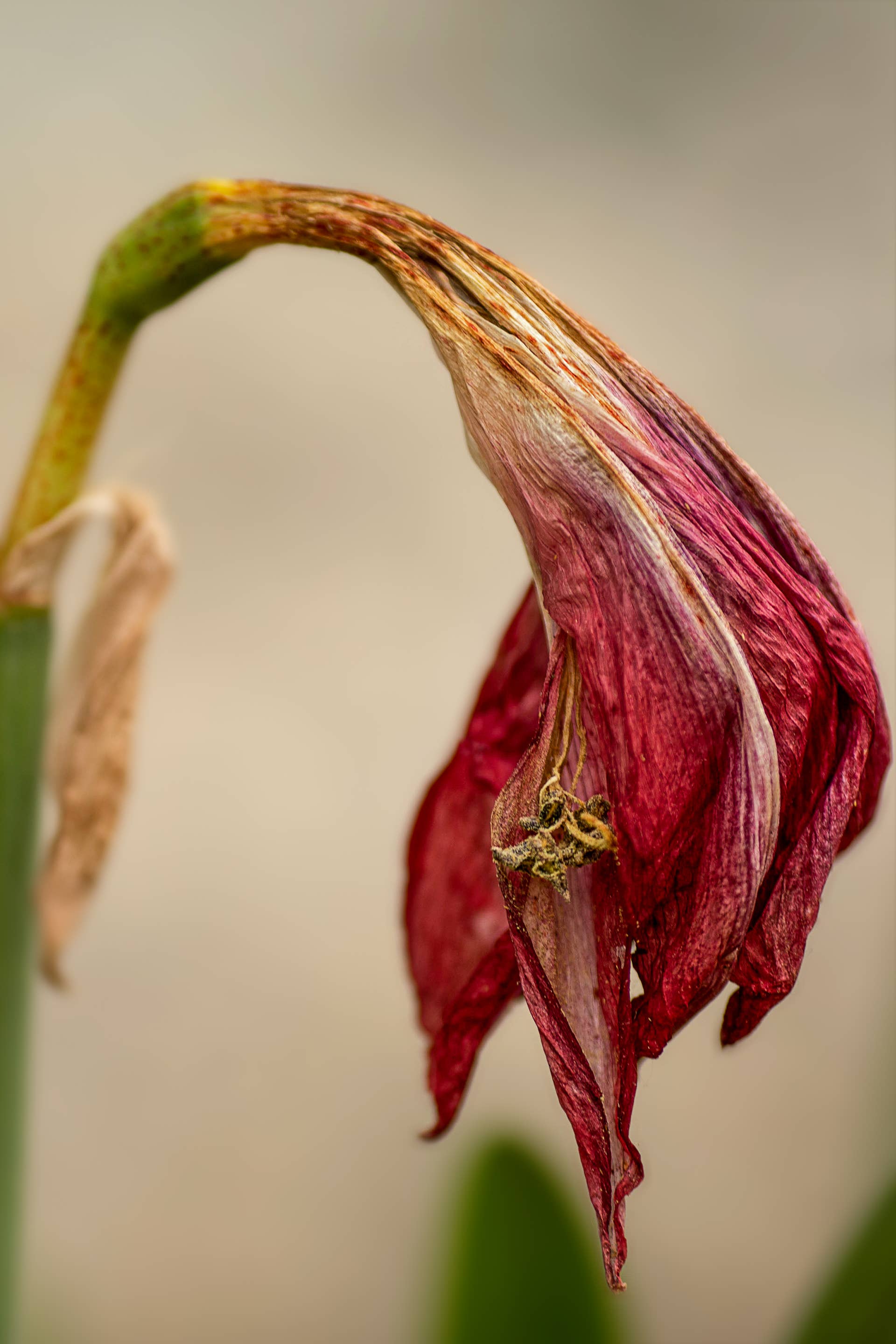
Once the blooms have begun to wither, snip off the flower stalks with clean pruners or floral snips. If left on the plant, the fading blooms will start to form seed pods. Seed production zaps a huge amount of energy away from the bulb; unless you are interested in growing amaryllis for seed, cut the stalks off. Do not remove the leaves during this time.
2. Treat It Like a Houseplant
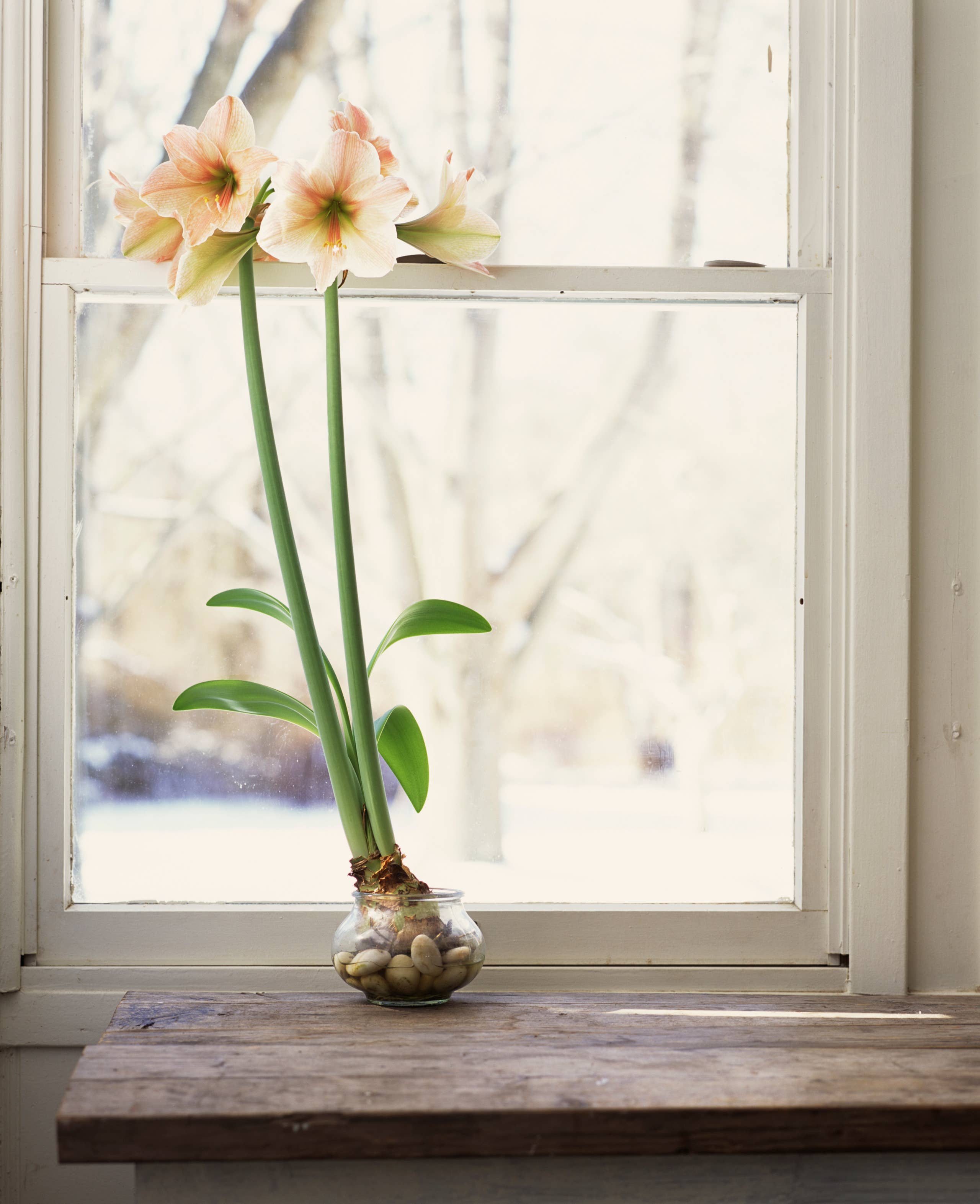
Continue to care for your amaryllis just as you would any other houseplant. Place the amaryllis in a bright room. Water plants deeply when the top 1-2 inches of soil feel dry— these plants prefer fewer, but more thorough, watering sessions over daily sprinkles. Fertilize the amaryllis plant monthly with a balanced houseplant fertilizer. During this time, the amaryllis will produce several long, strappy leaves. Encouraging plenty of healthy foliage growth will allow the bulb to rebuild the nutrient reserves needed for future flowers.
Once any risk of frost has passed and warm temperatures are well underway, amaryllis plants can even be moved outside. Choose a semi-protected location where the amaryllis has access to plenty of sun and natural rainfall. Gardeners in dry regions will need to provide supplemental water.
3. Allow the Bulb to Rest
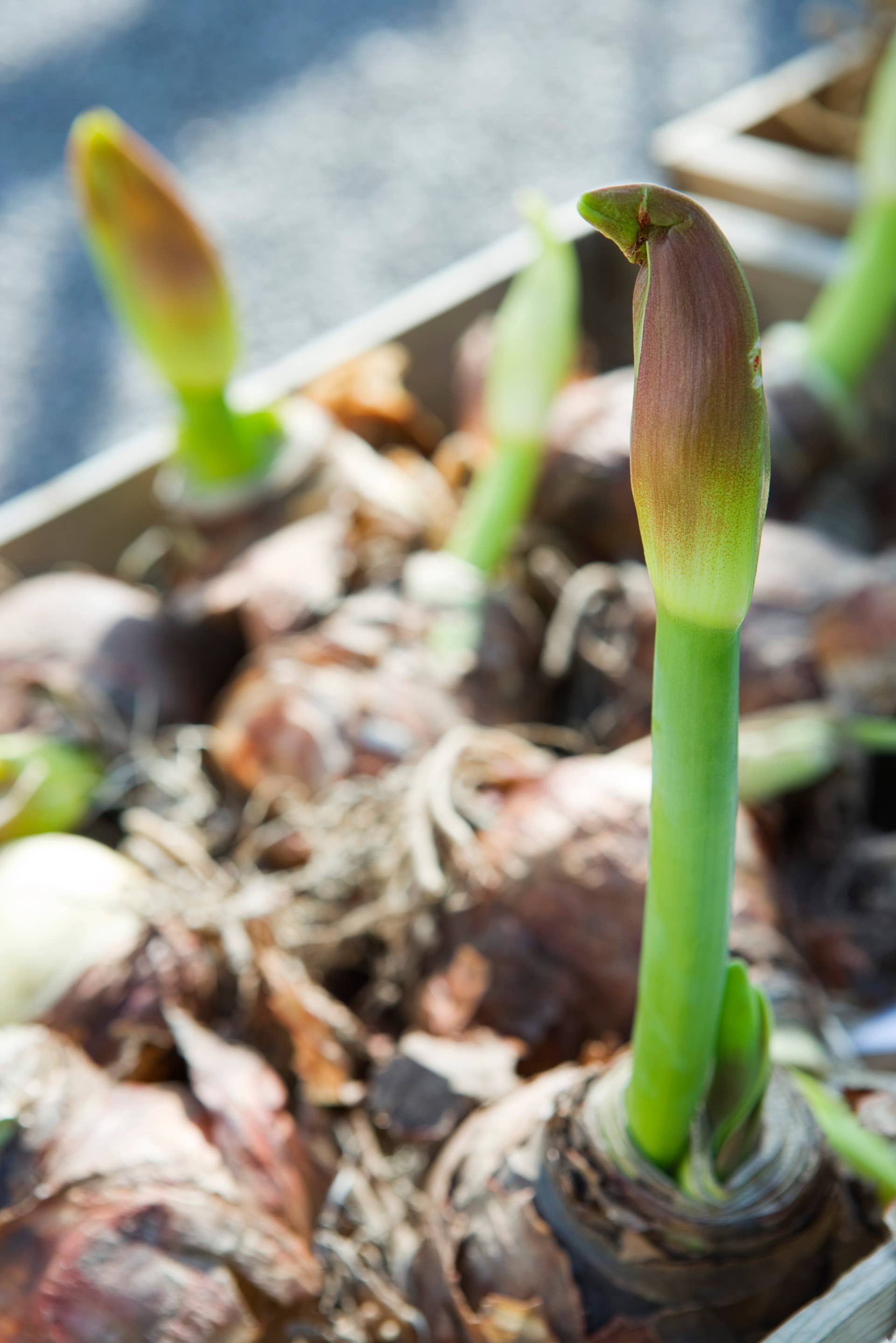
Time to reset the bulb. Commercially grown amaryllis bulbs don’t require a dormant period to grow, but forcing the bulb into a 6-10-week-long rest period can help control when flower buds form. If you’d like flowering to coincide with the holiday period, you’ll need to begin this step in early fall.
Place the potted bulb in a cool (55°F), semi-dark location. A basement or garage works well here. Stop watering the amaryllis, and allow the foliage to yellow and wither. Inspect the amaryllis bulb periodically for mold, but in general, leave it alone.
4. Wake the Bulb Back Up
After 6-10 weeks of rest, snip away any yellowed or dead leaves. Gently remove the bulb from its pot and brush away the old soil. Repot the amaryllis bulb in fresh potting soil. Water the bulb deeply and place the pot in a warm, sunny room. Fresh green growth will slowly emerge. Be patient; flowers can take 4-8 weeks to develop from dormant bulbs.
What Size Pot Does an Amaryllis Bulb Need?
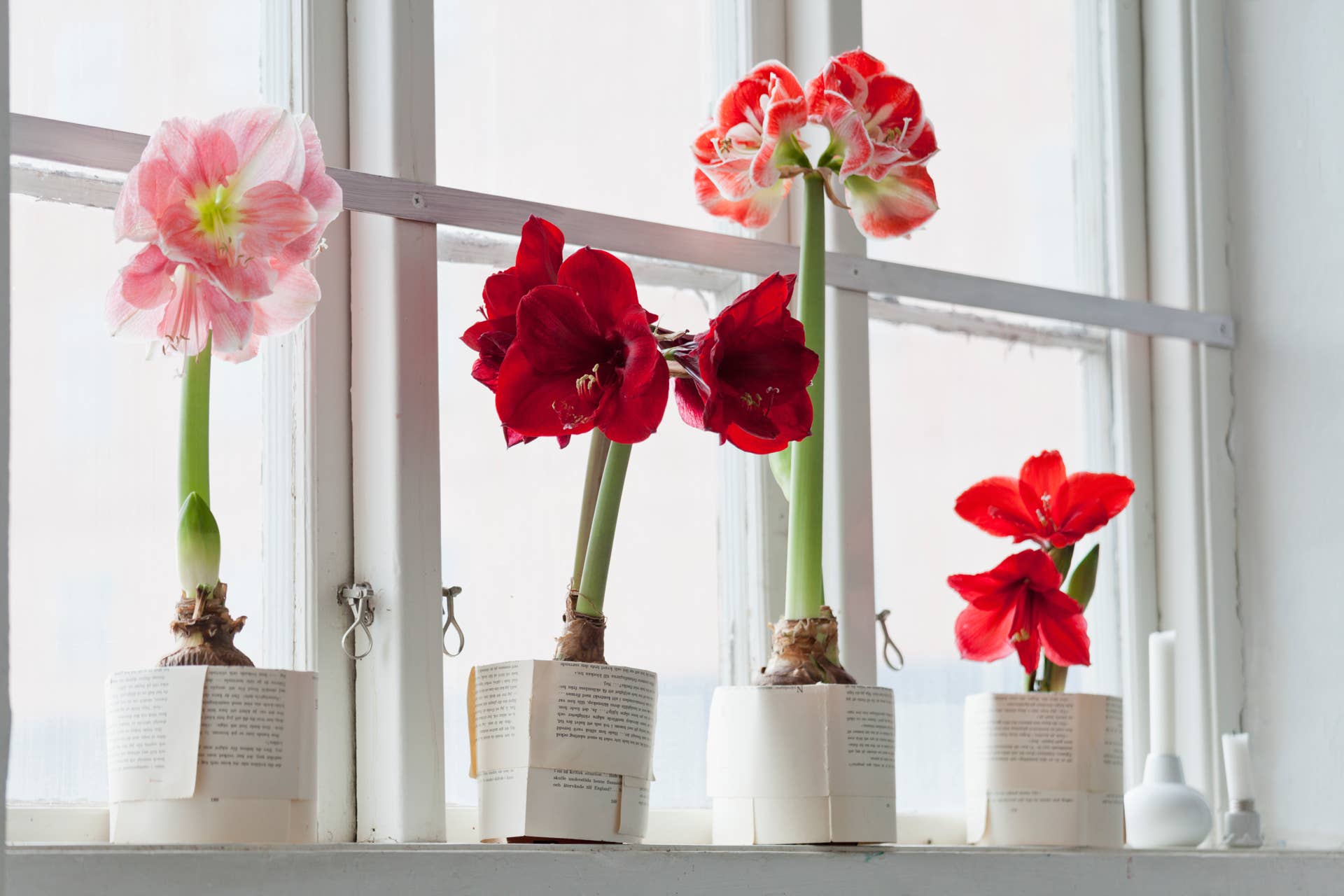
Like most other bulbs, amaryllis plants don’t require much space and actually prefer to be slightly potbound. Aim for 1-3 inches of soil surrounding the bulb; bulbs should fit snugly within the container but still have just enough soil to support modest roots. For single bulbs, a 6-8-inch pot is usually sufficient. If you are planting several bulbs together, choose a container that’s at least 10 inches in diameter. As always, be sure the pot has drainage holes on the bottom.
Can I Plant Amaryllis Bulbs Outside?
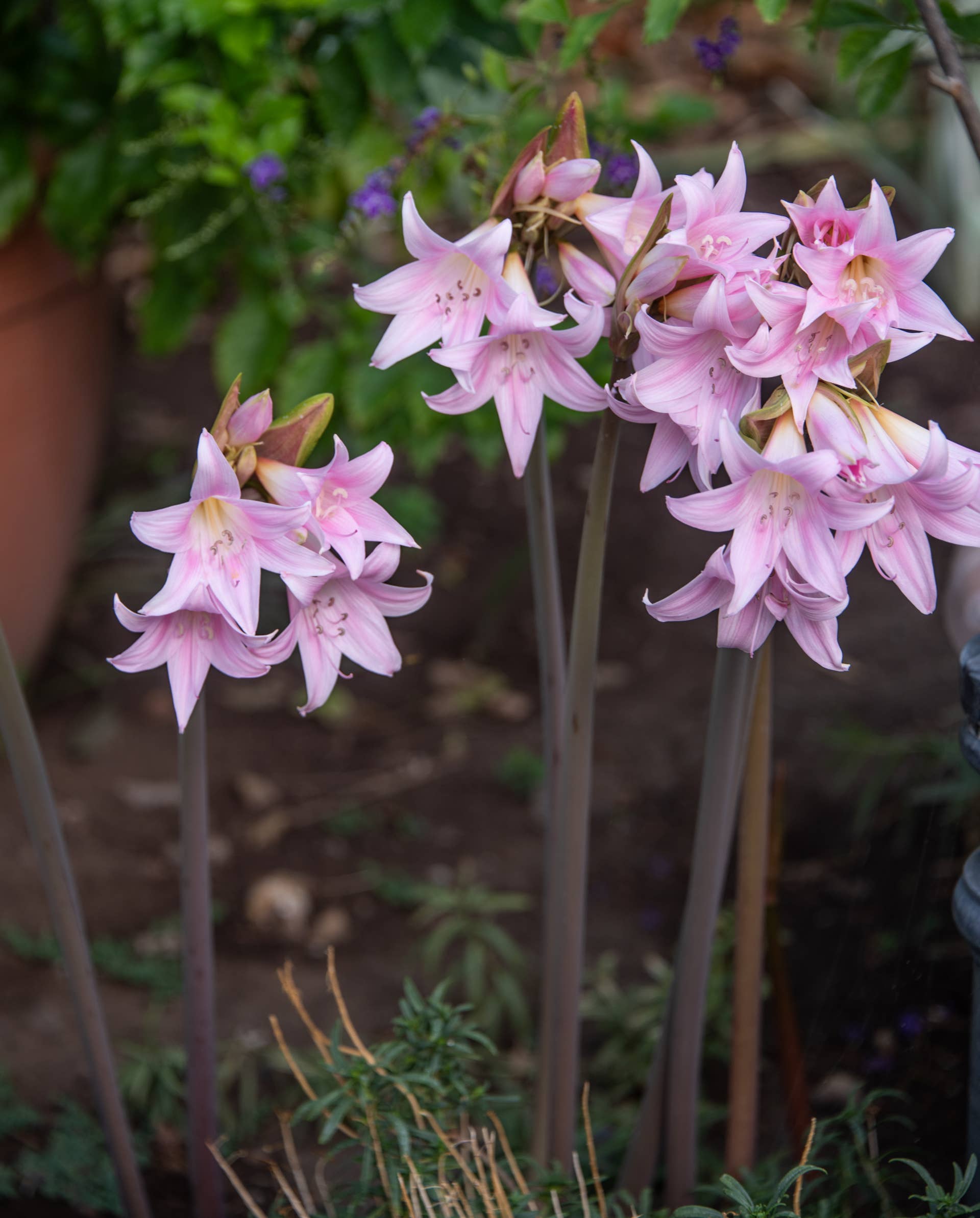
Amaryllis plants can be planted in the ground in frost-free Zones 8-10. These tender bulbs originate from Central and South America and are not cold hardy. In cooler regions, potted amaryllis plants can be moved outdoors for the summer months but will need to be brought indoors before frost in the fall.
My Amaryllis Grew Tons of New Leaves but No New Flowers. What Happened?
The giant, colorful blooms of an amaryllis require a lot of energy to produce. Bulbs that produce leaves but no flowering stalk likely didn’t have enough nutrients in reserve to support new blooms. Do not cut any of the foliage until leaves have yellowed and withered. As long as the leaves are green and growing, they are actively photosynthesizing and replenishing the bulb.


