
Humans have been enjoying the company of olive trees for thousands of years! Originating in the Mediterranean area, the olive tree quickly became an integral part of Old World cultivation.

As time passed and the Americas were explored, the olive tree’s grasp only grew larger. As they traveled overseas with the Spaniards in the 16th century, olive trees were destined to be grown all up and down the coastlines of the New World.
Although this sounds like the end of the story, it couldn’t be further from the truth. Olive tree cultivation is still expanding, except this time, it’s doing so one container at a time.
Entering into container gardens, olive trees continue to offer the lure and excitement that so many generations before have already discovered. By growing olive trees in containers, you’ll take your turn in uncovering this evergreen gem!
Due to its hardiness in nature, the olive tree can easily adapt to life in flower pots. Here are the basic necessities for growing them:
- How to Plant and Grow an Olive Tree in a Pot
- Olive Tree Watering Tips
- Yearly Care (When Will I Get Olives?)
- Cultivars
How to Plant and Grow an Olive Tree in a Pot
When purchasing and planting your olive tree, pay attention to a few things. Below you’ll find important information on how to properly care for your olive tree.
Sunlight Needs
Find the sunniest area on your patio or porch to grow your container olive tree. These trees thrive in full sunlight (6+ hours daily) and can tolerate even the hottest, most direct sunlight your area has to offer. Most garden plants tend to suffer in extreme heat, but not the olive tree.
Clay or Wood Container
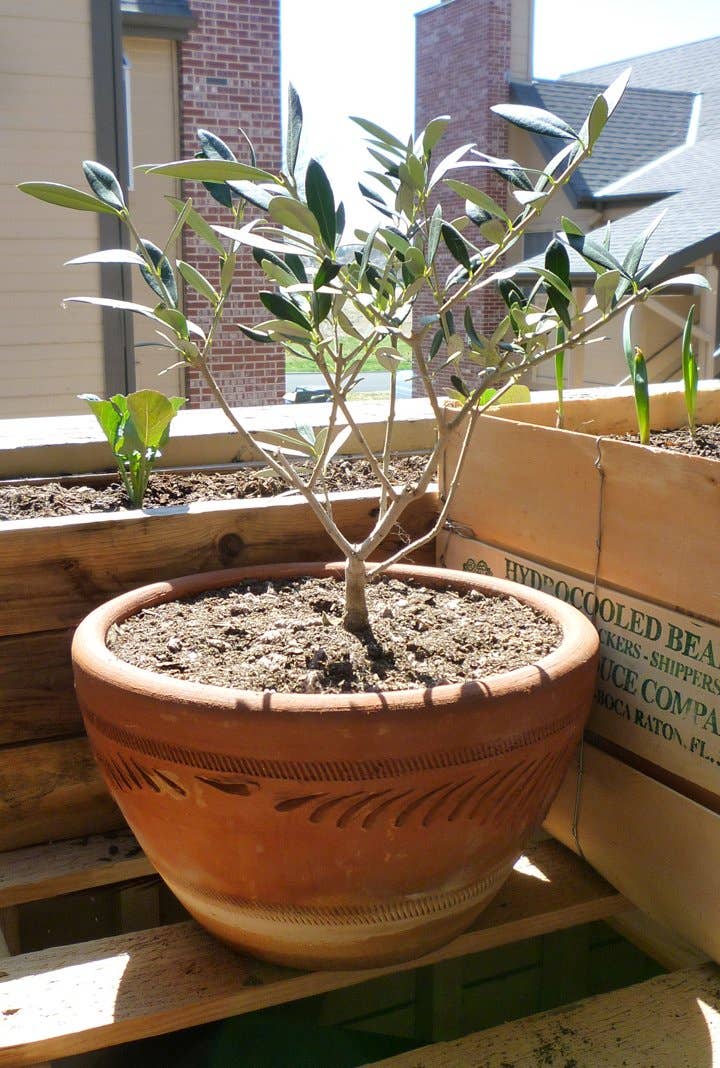
Choosing a clay or wooden container to house your tree all goes back to the matter of soil drainage. One thing that I’ve consistently found to be true in the garden is that plastic containers always retain a greater amount of moisture. Seeing that you want the roots to stay well-aerated, plastic is probably not the best option. Containers made from “breathable” materials such as clay and wood are much better choices.
Well-Draining Soil
When it comes to olive trees, soil fertility takes a backseat to drainage. These trees are well acclimated to growing in rocky soils with less-than-perfect nutrition. To simulate this in the container garden, start with an average organic potting soil and then amend with additional perlite or, even better, a cup or two of small lava rocks. This spreads out the nutrition and increases the drainage capabilities.
What Is the Best Soil for Olive Trees in Pots?
Well-draining soil that’s rich in organic matter is preferred by olive trees; you can obtain commercial potting mix with perlite or vermiculite, and that will work well for your potted olive tree.
Obtaining Your Tree
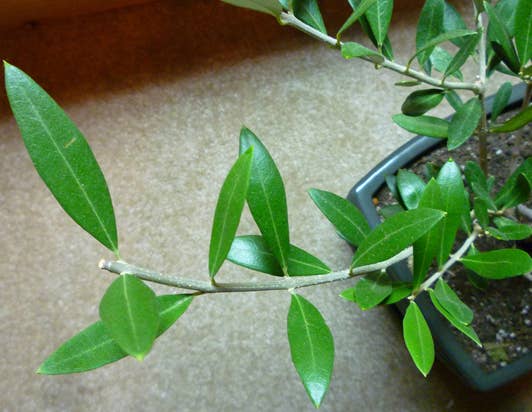
It’s important to select the greenest and most healthy-looking olive tree that you can possibly find. The foliage should be a healthy dark green without any excessive browning or dying leaves.
Be sure to also check for scale. These pests are common in coastal areas and can easily be seen with the naked eye. Typically, they are black in color and will cluster on young branches. While they can easily be deterred with an organic soap spray, it’s better just to skip the trouble and buy a healthy plant to start with.
Planting in a Container
After the threat of frost has passed, prepare your container and soil mix. Remove the olive tree from the container you purchased it in and gently shake off the soil from the roots. Once the previous soil has been removed, gently trim off any dead or dying roots. Plant into the new container, gently pack down the soil, and then water in well.
Bring Indoors
If you live in an agricultural zone lower on the scale than zone 7A, you’ll need to bring your patio olive tree indoors for the winter months. The timing of this event is a sensitive matter for your tree.
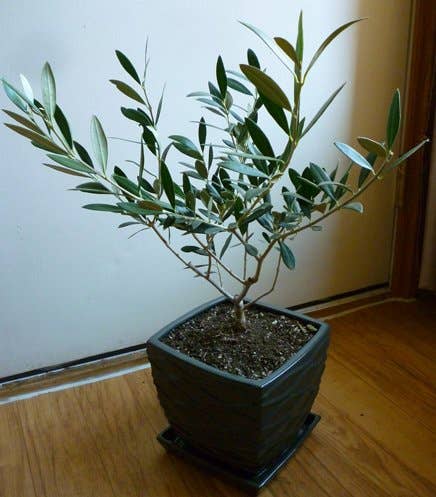
To achieve a winter dormancy state, olive trees need to be exposed to a couple of weeks of nighttime temperatures that drop down to a little below freezing. After two weeks of cooler temperatures (or if the temperatures drop below 22°F), bring the olive tree indoors. Place on a bright windowsill or under artificial lighting. Make sure that your tree is placed away from any cool drafts or heaters.
Springtime Reconditioning
A month or two before you are ready to move your olive tree back outdoors, you should prepare the container for the season ahead. For small trees, you may want to re-pot them into a slightly larger container with a fresh soil mix. Larger, more established olive trees do not need to be re-potted on a yearly basis but will benefit from a small layer of compost spread around the base of the tree.
Pruning
Skip out on pruning your olive tree during the first year. After that, prune the olive tree during the spring season. Cut the tips off of growing branches to keep the foliage from becoming too straggly. Trim back to whatever length you’ll think will look nice in your container. For fruiting olive varieties, prune the plant so that it has three to five main branches. This will keep them productive when olives begin to set.
Olive Tree Watering Tips
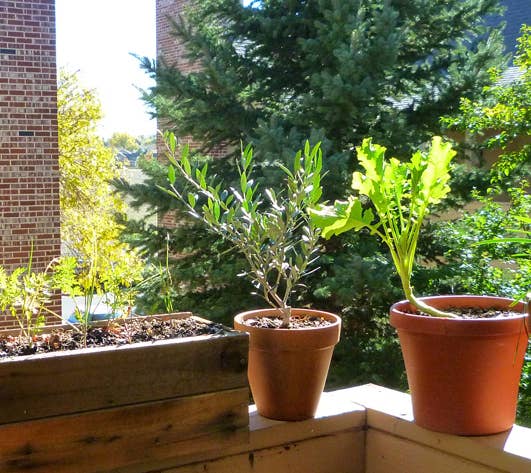
Beginner gardeners are notorious for overwatering. While some garden plants will tolerate the extra water, the olive tree will not! Consistently soggy soil will kill olive trees. Always make sure that the soil has become dry in between waterings.
The frequency of water needed will depend on the size and type of container you choose to plant in. In general, water your olive tree deeply once the top 2-3 inches of soil has been allowed to dry. Since the trees are drought-tolerant, they will not mind the soil drying.
When watering, never leave the planter sitting in standing water. This is one surefire way to saturate the soil and kill your tree. Always allow excess water to drain freely from the planter.
4. Yearly Care (When Will I Get Olives?)
Once established in its container, your olive tree won’t need much care other than a few measures on a yearly basis. By completing the following yearly care, you’ll help to ensure that your olive tree stays healthy for a long time to come!
Depending on the initial age of your olive tree cutting, it may take a couple of seasons of growing before your tree produces any olives. Most store-bought olive trees are around two years of age, so you may have to wait three years for the first olives to appear. Olive trees grown from seed may take four to six years (sometimes even longer) before they start producing olives.
Olive Tree Cultivars
| Variety | Reproduction | Fruits |
|---|---|---|
| Arbequina | Self-fertile | Small but very fleshy |
| Frantoio | May need another olive tree for proper fertilization | Large olives |
| Mission | Self-fertile | Large olives |
| Picual | Self-fertile | Large olives |
Frequently Asked Questions
How big of a container do I need for an olive tree?
To grow an olive tree in a container, you will need a strong, well-draining pot that’s at least 10–14″ in diameter.
What is the best potting mix for olive trees?
Olive trees prefer a fast-draining potting mix—cacti or succulent potting mix works great.
How long do potted olive trees live?
These trees can live up to eight or nine years in a pot. When planted in the ground, an olive tree lives an average of 500 years.
Best of Luck With Your Container Olive Tree
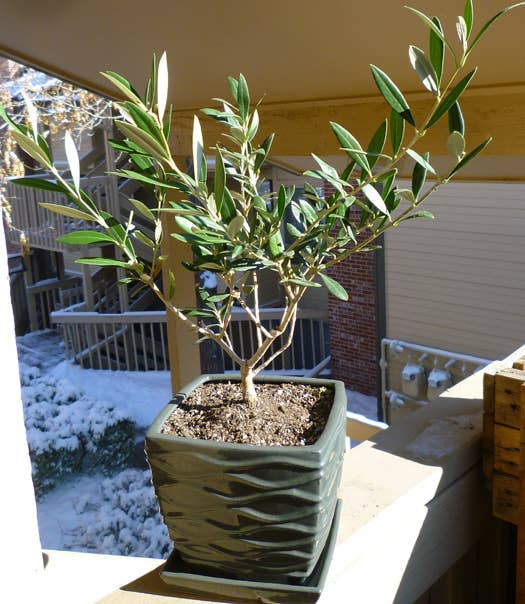
With a little care and a whole lot of sunlight, you’ll be able to keep your olive tree alive and productive for many years. As olive trees are known to live for hundreds, and sometimes even thousands of years, your patio tree could end up being a lifelong friend. Now, that’s pretty awesome if you ask me!
Thanks for reading this guide on growing olive trees in containers. Best of luck with your container olive tree, and as always, please feel free to leave any comments or questions you might have.


