
Some flowers don’t just represent love—they literally bloom in the shape of a heart. These unique plants look like they were made for romance, with petals and leaves that naturally form this iconic shape. They bring a playful yet meaningful touch to your garden, porch, or even indoor space, and many are surprisingly easy to grow.
Dutchman’s Breeches (Dicentra cucullaria)
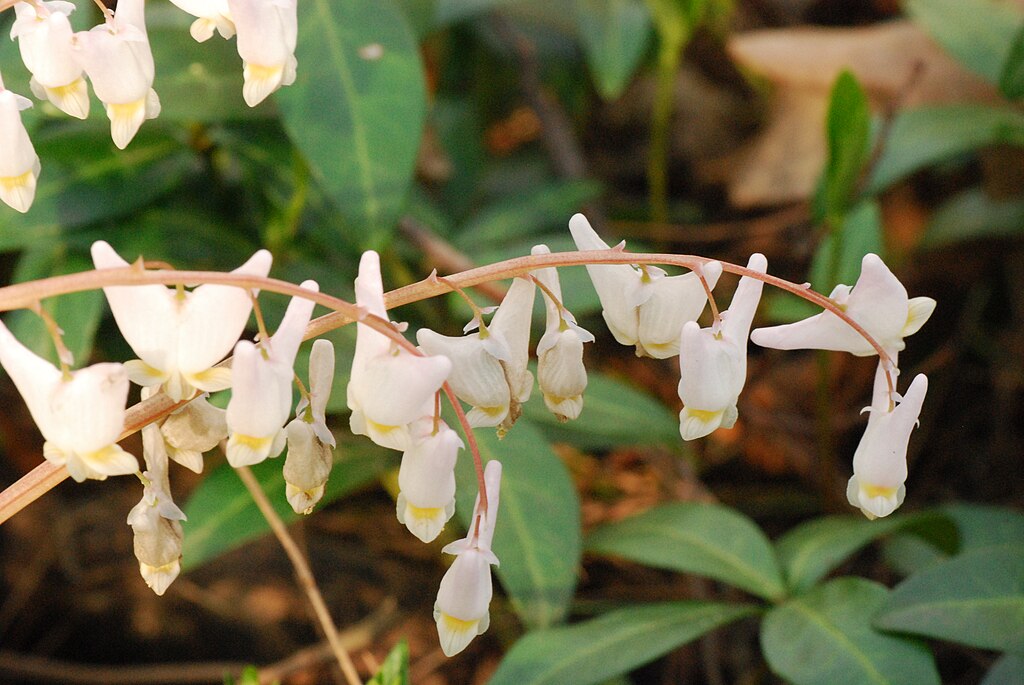
Dutchman’s Breeches bloom early in spring, and their flowers open in the morning and close at dusk during their brief bloom period. Once these heart shaped flowers finish blooming, the plant goes dormant until the following season. They thrive in shady, woodland settings in USDA zones 3 through 7. They also enjoy growing in moist, rich soil and dappled light.
Anthurium
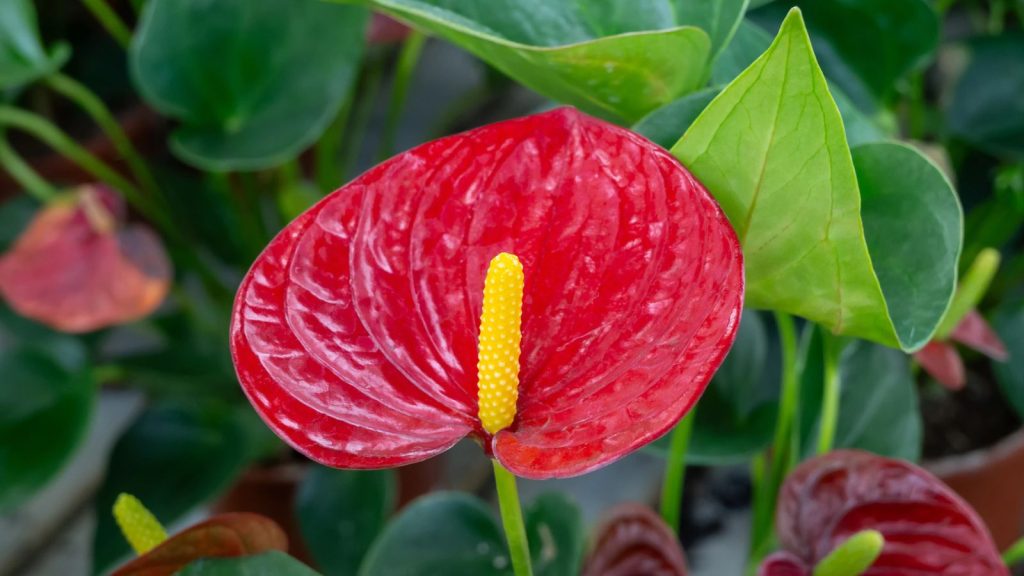
Anthuriums are often called flamingo flowers because their look like the beak of a flamingo but also the shape of a heart. They can bloom all year round indoors if you provide them with the right care.
They grow well in USDA zones 10–12 and prefer bright, indirect light and warm, humid conditions. Wipe the leaves occasionally to keep them glossy, and fertilize them lightly every few months to encourage continued blooming.
Bleeding Heart
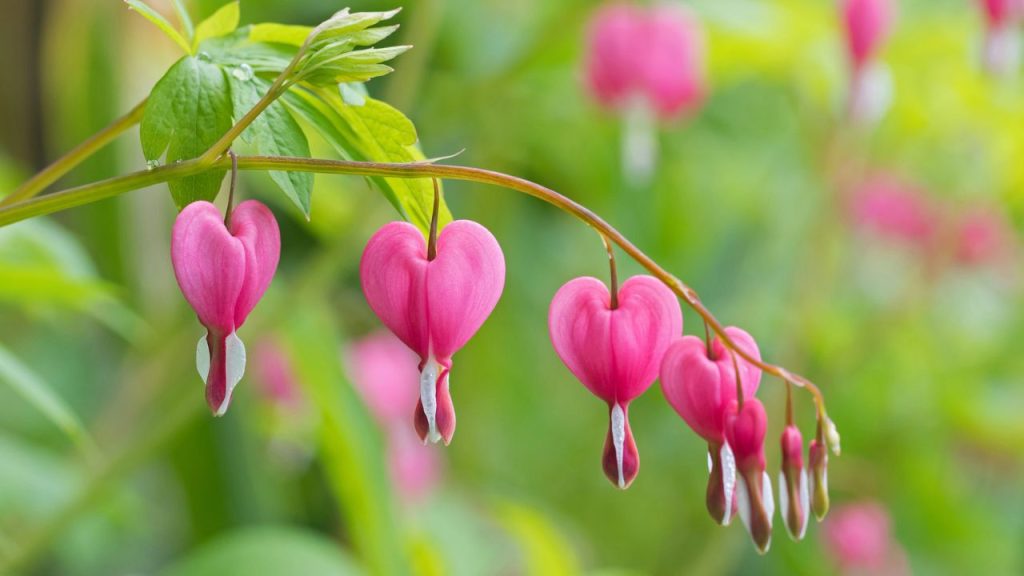
Bleeding hearts are named after their heart-shaped that hang from arching stems. They have a whimsical, fairy-tale feel and were often tucked into shady corners of older gardens. They do best in part shade and moist, well-draining soil, and USDA zones 3 to 9.
Caladium

Caladiums produce dazzling heart-shaped leaves with splashes of white, red, pink, and green. They’re popular plants to grow in containers and shady beds because of their boldness. While they’re tropical and grown as annuals in cooler zones, in USDA zones 9–11, they can be left in the ground year-round.
Maintain your caladiums by giving them dappled light and consistent moisture. If you’re in a colder zone, lift the tubers before the first frost and store them indoors for replanting the following spring.
String of Hearts (Ceropegia woodii)

The string of hearts, or Ceropegia woodii, is a hanging plant known for its delicate, heart-shaped leaves. It thrives in indirect sunlight and prefers to be watered sparingly. It is ideal for zones 9 to 12.
Calla Lily (Zantedeschia aethiopica)

Known for their elegant white spathes, Calla Lilies are a striking addition to part . They do best in moist, rich, well-drained soil and may need protection in cooler growing zones during winter.
Morning Glory (Ipomoea spp.)

are classic diurnal bloomers, meaning they open early in the morning and begin to close by mid- to late-afternoon. While their flowers don’t resemble a heart, their leaves do.
On cloudy days, they may barely open at all. They’re perfect for covering mailboxes or creating living fences, and they while they’re open.
Morning glories love full sun and grow best in USDA zones 3–10. These fast-growing vines need something to climb, like a trellis or fence. Water them regularly, especially when the weather is particularly dry, but avoid overwatering to the point where the soil becomes soggy.
Cyclamen (Cyclamen persicum)

Similar to morning glory, the leaves of Cyclamen resemble a heart. This cool-season is best known for its delicate, upswept petals. Each leaf forms a near-perfect heart, often patterned with silvery or pale green marbling that makes the shape stand out even more. Its flowers appear in shades of pink, red, white, or purple, rising gracefully above the leaves on slender stems.
Sweet Potato Vine (Ipomoea batatas)
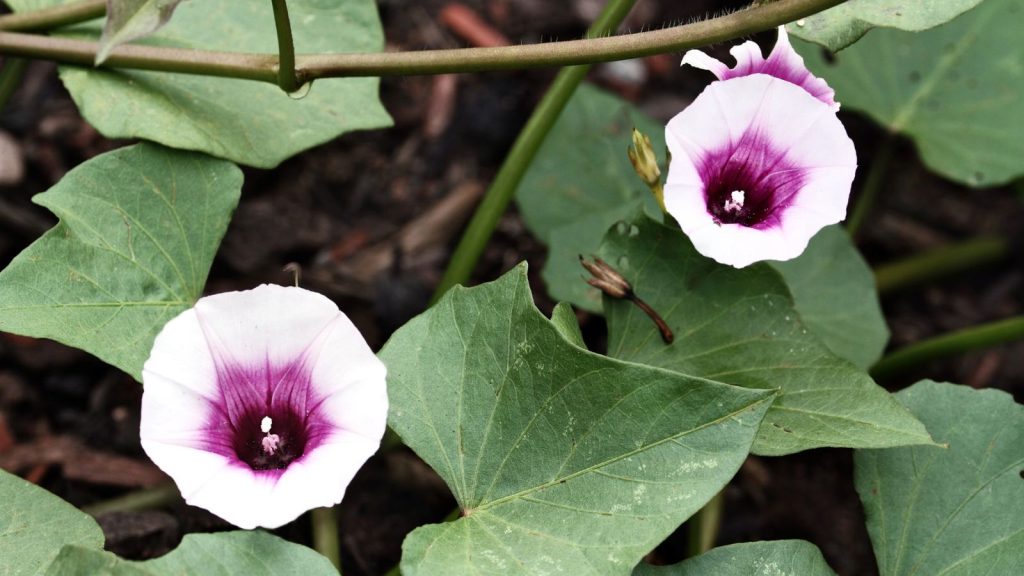
Sweet potato vines are grown more for their ornamental value than for flowering. They feature heart-shaped leaves in tones of pink, purple, and brown. While , their vines perform best with at least six hours of sunlight daily.
They grow well in well-drained loamy or sandy soil with a pH between 4.5 and 7.0 and are hardy in USDA zones 5–11. Their bloom season spans spring and summer.
Dutchman’s Pipe
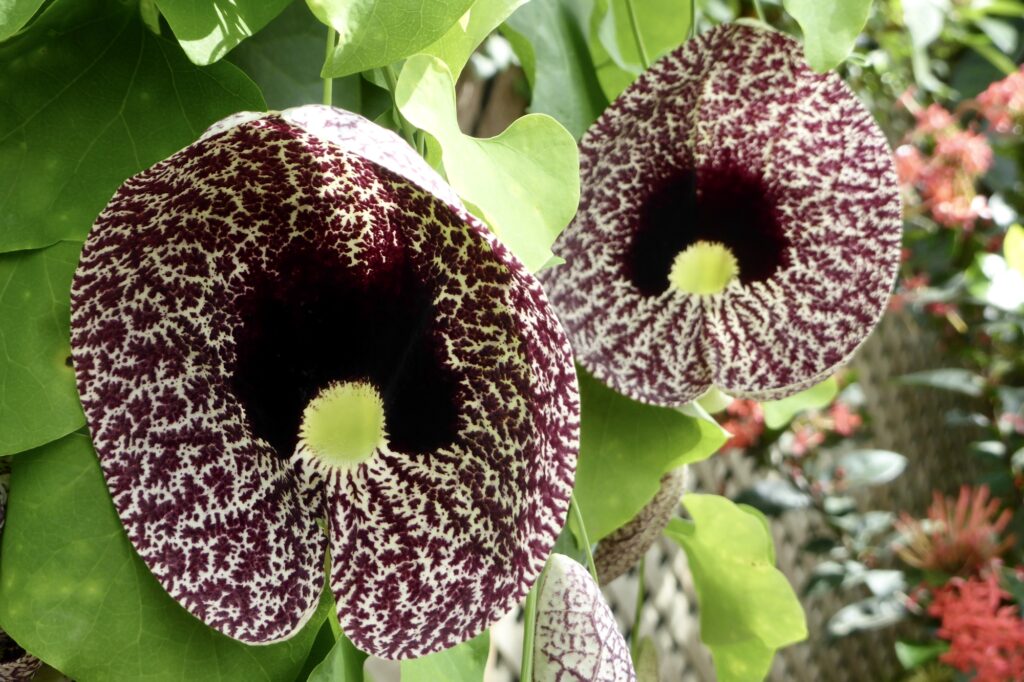
Dutchman’s Pipe is an unusual vine known for its large, heart-shaped leaves. While its flowers have a curved, pipe-like appearance, the foliage is where you’ll find that distinct heart-like charm. This plant is often grown along trellises or fences, offering both beauty and privacy. This plant thrives in partial shade with rich, moist soil.
Rex Begonia

Rex begonias might just be the most flamboyant foliage plants out there. Their spiraled, crinkled, or textured leaves come in dramatic shades of silver, purple, red, and green.
While they do flower, that’s not the reason people grow them, and they certainly do not flower indoors. Rex begonias thrive in bright indirect light and high humidity, making them an excellent choice for houseplants or summer containers. Keep their soil lightly moist and avoid direct sun to prevent leaf burn.


