
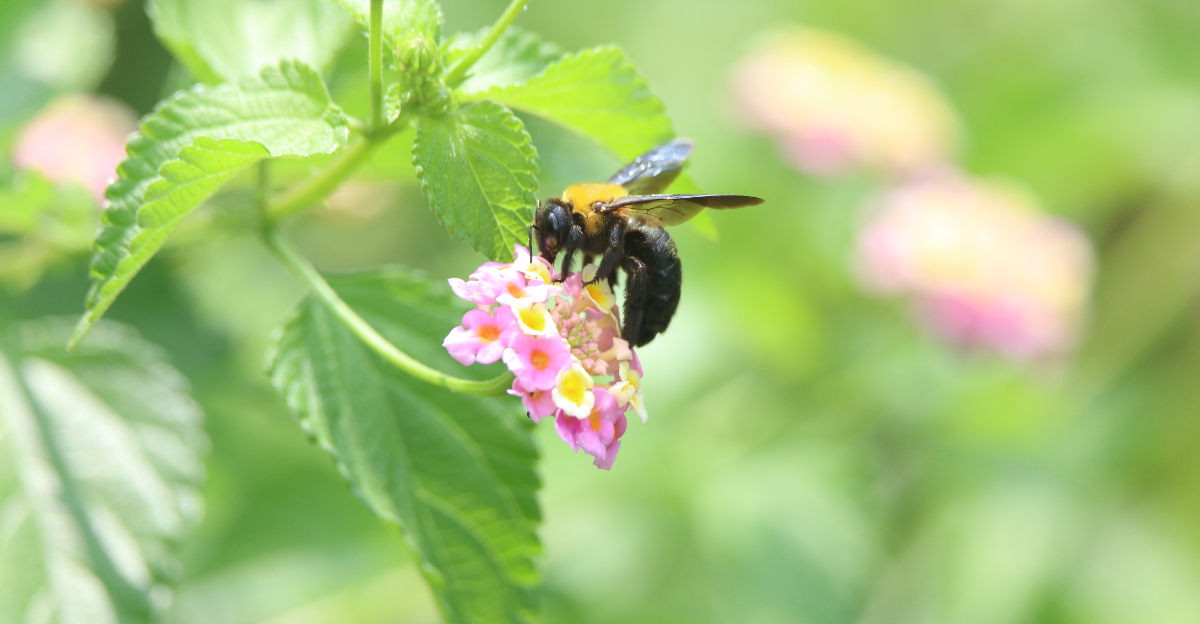
You walk outside and there they are, big, bold, and flying with a confidence that feels slightly personal.
Carpenter bees hovering around your porch, your eaves, your wooden fence, circling in that distinctive way that makes you wonder what exactly they’re planning.
Most people’s first reaction is to get rid of them as fast as possible, which is understandable.
But before you do anything, it helps to know what their presence is actually telling you about your home and your yard, because carpenter bees don’t show up randomly.
They’re responding to something specific, and understanding what that is gives you much more useful information than just knowing they’re annoying.
Some of what they signal is genuinely worth addressing. Some of it might actually change how you feel about having them around in the first place.
1. They Are Looking For Nesting Sites In Bare Or Unpainted Wood
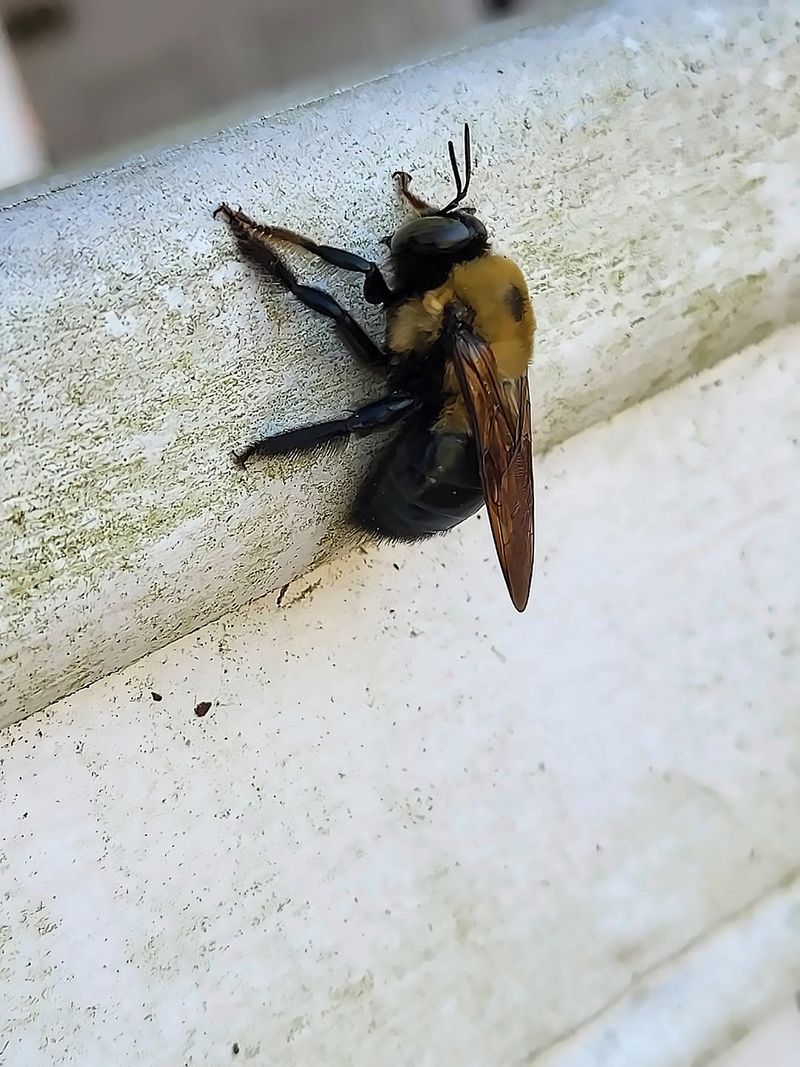
Bare wood on a porch is basically a welcome sign for carpenter bees. These bees do not eat wood the way termites do.
Instead, they chew through it to create smooth, round tunnels where they lay their eggs and raise the next generation. If your porch has exposed, unfinished wood, it becomes one of the most attractive nesting spots in the neighborhood.
Subscribe to Positive Bloom!
Carpenter bees prefer wood that has no paint, stain, or sealant on it. Fascia boards, porch railings, deck beams, and pergola posts are all common targets when left untreated.
The good news is that a small number of nesting holes does not automatically mean your structure is in serious trouble. One or two tunnels rarely cause major damage on their own.
The bigger concern comes when the same spots get used season after season, allowing tunnels to grow longer over time. Catching the activity early gives you the best chance to protect your wood before anything significant happens.
A coat of exterior paint or wood sealant goes a long way toward making your porch far less appealing to these industrious little nesters. Treating exposed wood is one of the easiest and most effective steps a homeowner can take.
2. Spring And Early Summer Is Their Most Active Season
Every spring in North Carolina, carpenter bees seem to appear almost overnight. Warmer temperatures and longer days trigger their emergence from the tunnels where they spent the winter.
By April and May, activity around porches and wooden structures reaches its peak, making this the time of year when most homeowners first notice them buzzing around.
Mating happens during this busy spring window, which is why you often see multiple bees hovering near the same spot at once. After mating, females get straight to work chewing new tunnels or refreshing old ones to prepare for their eggs.
Each female typically lays a small number of eggs, carefully packing each chamber with pollen and nectar as a food source for the larvae.
By late summer, activity slows down considerably as the new generation develops inside the tunnels. The bees that emerge in late summer will eventually find shelter in existing tunnels to wait out the winter.
Knowing this seasonal rhythm makes it much easier to plan ahead. If you want to treat or seal your wood, late summer through early fall is actually the ideal window to do it, after the active season winds down but before the next spring cycle begins again.
3. Male Carpenter Bees Often Hover Near People
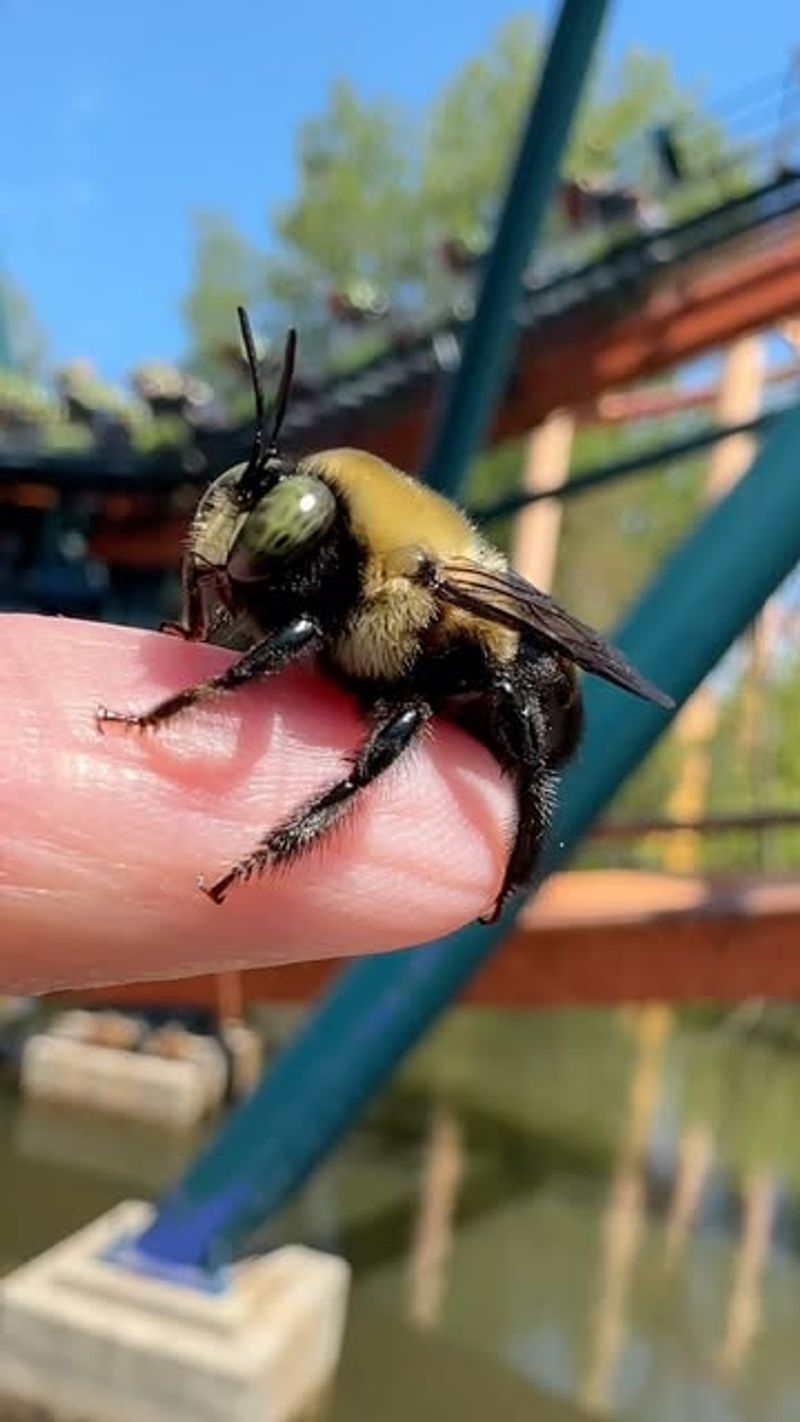
Few things startle a porch visitor quite like a large bee flying straight toward their face and refusing to back off. That bold, hovering bee is almost certainly a male carpenter bee, and here is the surprising truth about him: he cannot sting.
Males simply do not have a stinger. All that dramatic hovering and darting around is just territorial display behavior, nothing more.
Male carpenter bees set up patrol zones near nesting sites and spend their days chasing off anything they perceive as a threat, including other bees, insects, and yes, curious humans.
They are genuinely relentless about it, which makes them feel far more intimidating than they actually are.
Once you know they are completely harmless, it is actually pretty entertaining to watch them work.
Female carpenter bees do have stingers and are capable of stinging, but they are remarkably non-aggressive. A female will almost never sting unless she is physically handled or trapped.
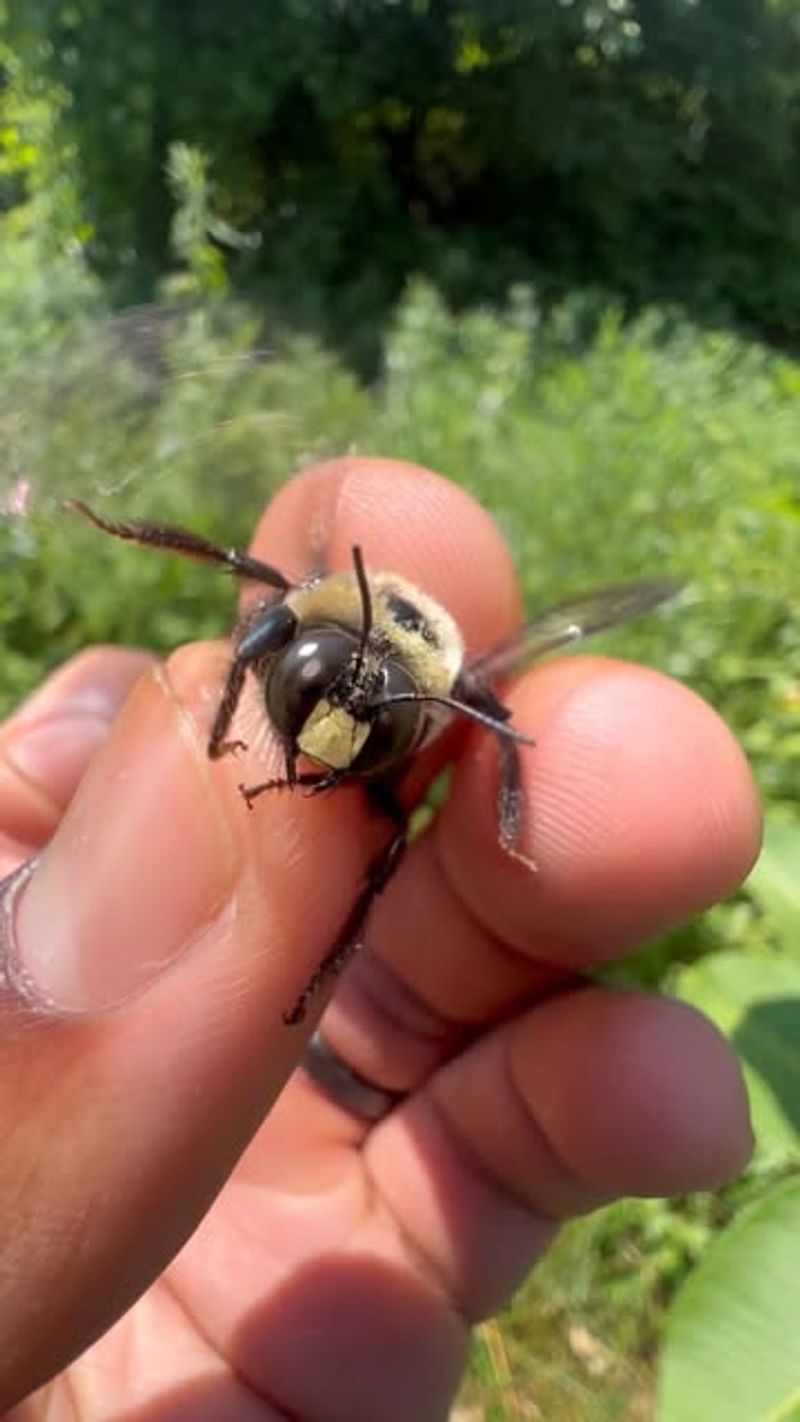
Watching which bee is doing the hovering can actually help you tell the two apart. Males often have a small yellow or white patch on their face, while females tend to be entirely black on the face.
Knowing this makes the whole experience on your porch feel a lot less stressful.
4. Their Presence Usually Means The Area Supports Pollinators
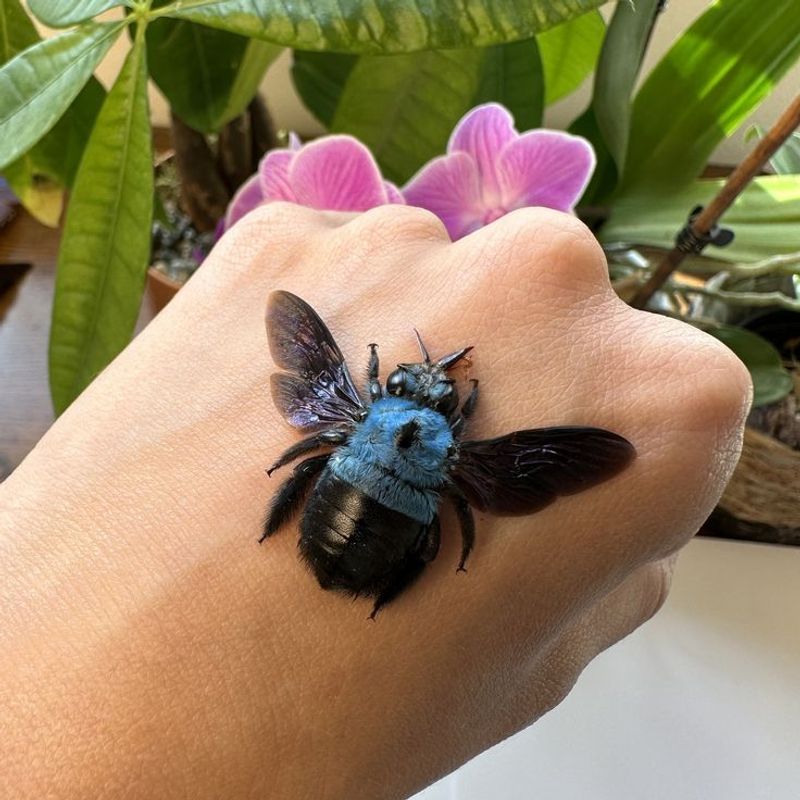
Carpenter bees are not just wood-boring nuisances. They are genuinely important native pollinators, and their appearance around your porch often signals that your yard and neighborhood offer a healthy, food-rich environment for wildlife.
That is actually something to feel proud of as a homeowner and gardener. One of the most impressive things about carpenter bees is a behavior called buzz pollination, or sonication.
They grab onto a flower and vibrate their flight muscles at just the right frequency to shake loose pollen that other pollinators cannot access.
Plants like tomatoes, blueberries, and passionflowers depend heavily on this technique. Native North Carolina plants such as purple coneflower, black-eyed Susan, and native wisteria are particularly popular with carpenter bees.
A yard full of native flowering plants is going to attract carpenter bees consistently, and that is largely a positive sign for the local ecosystem. Gardens that support carpenter bees also tend to support other beneficial insects, birds, and small wildlife.
The presence of these bees suggests your outdoor space has real ecological value. Appreciating them as pollinators while also managing where they nest on your structures gives you the best of both worlds, a thriving garden and a protected porch.
5. They Prefer Softwoods Such As Pine And Cedar
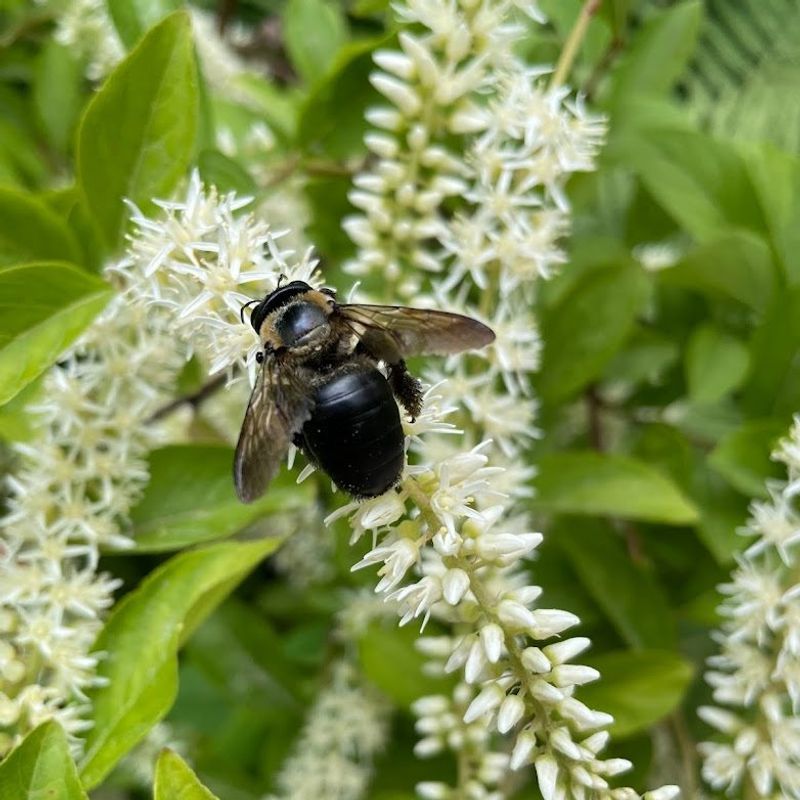
Not all wood is equally appealing to a carpenter bee. Softwoods are their top choice, and in North Carolina, that means pine and cedar are the most commonly targeted materials on residential porches and decks.
Both woods are widely used in outdoor construction across the state, which is part of why carpenter bee activity is so common here.
Cedar is particularly attractive because it is naturally soft, easy to chew through, and often left unfinished or lightly treated. Pine is similarly soft and widely used for porch railings, fascia boards, and trim.
Redwood, another softwood used in outdoor structures, also ranks high on their list of preferred nesting materials. Hardwoods like oak or pressure-treated lumber are generally much harder to tunnel through and are far less frequently targeted.
Sawdust or a yellowish-brown stain below a small hole on your porch is often the first clue that carpenter bees have chosen your softwood for nesting.
Checking the undersides of railings and the edges of fascia boards each spring gives you an early heads-up.
Replacing softwood trim with harder materials during renovations, or consistently keeping all wood sealed and painted, dramatically reduces the chances of your porch becoming a favorite nesting destination season after season.


