
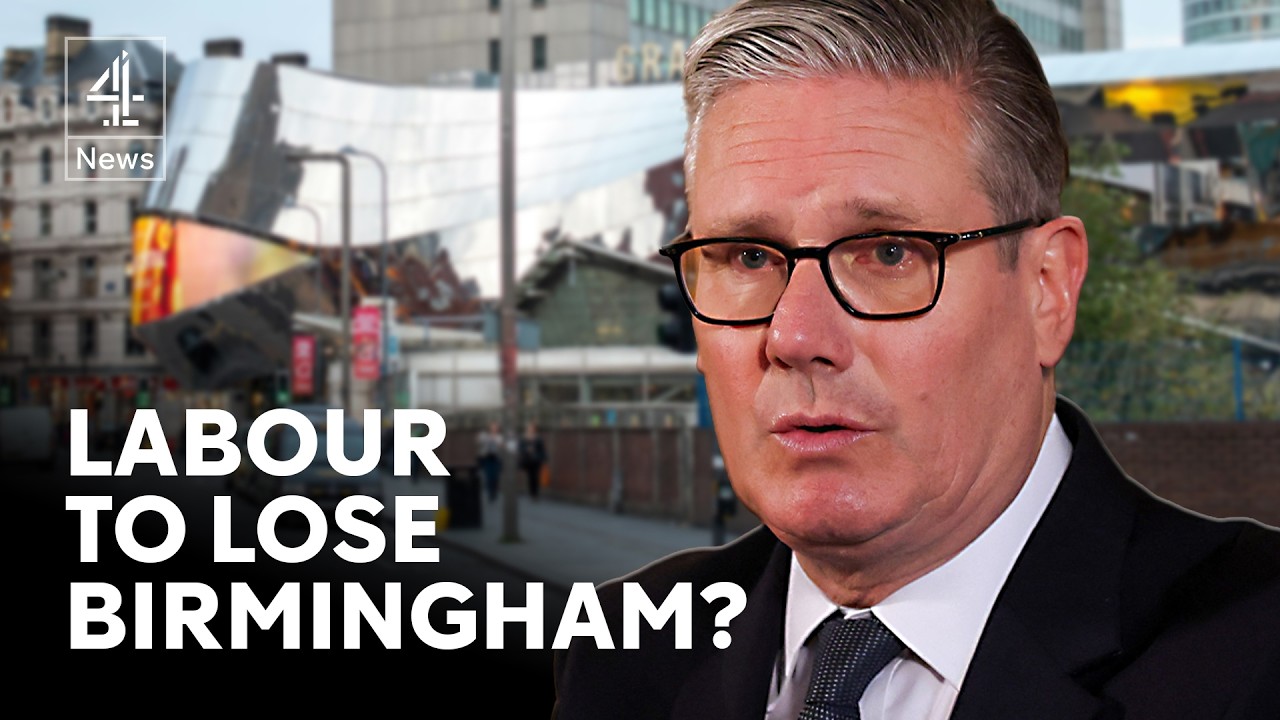
With local elections approaching, Labour insiders are reportedly bracing for serious losses after 14 years in power. Observers say the result in Birmingham could become a major warning sign for the party nationally, particularly for Prime Minister Keir Starmer, whose leadership is increasingly tied to whether Labour can maintain authority in key urban strongholds.
A city that should be thriving, but isn’t
Birmingham is widely regarded as the largest urban economy outside London, and over the past decade it has attracted substantial private and public investment. It also holds a strong cultural identity, shaped by generations of migration and a reputation as one of the most diverse cities in Europe.
A prolonged bin strike has left rubbish piling up in parts of the city, while council tax increases have added pressure during a wider cost-of-living crisis. At the same time, Birmingham City Council has faced repeated operational failures, including IT issues and claims of mismanagement.
A report commissioned by Labour itself previously described the council’s leadership as “dysfunctional,” an assessment that has become central to the political narrative ahead of the vote.
For many voters, the gap between Birmingham’s potential and its current reality is becoming impossible to ignore.
Labour faces a turning point after 14 years
Labour has dominated Birmingham politics for more than a decade, making the city one of its most significant strongholds. The stakes are high not only locally but also symbolically.
Eight of Birmingham’s ten MPs are Labour, including prominent figures such as Shabana Mahmood and Jess Phillips. Any major loss of support would therefore send a clear signal that Labour’s traditional base is becoming unstable.
The Labour leadership has attempted to stabilize the situation by installing new council leadership. Three years ago, John Cotton was selected by the party’s national executive to lead the council after the internal report criticized the authority’s dysfunction.
However, the council’s troubles have continued, and many residents appear unconvinced that Labour can deliver meaningful improvement.
Bin strikes dominate voter anger
The number one issue dominating the election is the ongoing bin strike. The dispute has become a public symbol of a city struggling to function.
For voters, it is not only about waste collection. It represents wider frustrations over declining public services, broken infrastructure, and perceived political incompetence.
When questioned about the strike, Labour figures have insisted that progress has been made and that a deal has been reached. However, critics argue that announcing a deal just before elections looks like political maneuvering rather than effective leadership.
Opponents have accused Labour of reacting only when its power is threatened.
Labour officials, meanwhile, have defended the timing, arguing that the dispute required careful negotiation and could not be rushed.
Independent candidates push a pro-Palestine platform
One of the most significant challenges to Labour comes from a coordinated alliance of independent candidates across Birmingham. Many are running on explicitly pro-Palestine positions, seeking to capture anger among voters who believe Labour has failed to represent their views on foreign policy.
A key figure behind this effort is Akhmed Yakoob, described as a controversial TikTok lawyer who came close to unseating the Home Secretary at the last general election.
The independent campaign is attempting to capitalize on disillusionment with traditional party politics. Their messaging is designed to attract voters who feel Labour no longer represents working-class communities or minority voters as it once did.
One independent candidate highlighted in campaigning is Shahid Butt. His candidacy has drawn heavy criticism due to a past conviction related to terrorism.
Butt was found guilty in Yemen 25 years ago of involvement in a plot to blow up the British Embassy. He has consistently contested the conviction, and under UK electoral rules, he is still legally allowed to stand for office.
When questioned about whether he tells voters about his conviction while canvassing, Butt suggested that openly introducing himself as a “convicted terrorist” would be counterproductive, claiming that people already know his background and that he prefers to focus on local issues.
Critics argue that such a response raises serious questions about transparency and trust, while supporters claim his past is being used politically to discredit him.
Reform UK seeks a breakthrough in the city
Another emerging force is Reform UK, which has been attempting to position itself as the party of frustration and change. Reform has been polling strongly in parts of the West Midlands, though analysts suggest Birmingham itself may be more difficult territory.
One Reform candidate featured is Ali Taronsari, originally from Iran, who moved to the UK as a student. He argues that Reform is capable of appealing to Birmingham’s diverse communities and rejects criticism that the party’s messaging is inherently divisive.
Taronsari claims that Reform’s diversity among candidates allows it to speak credibly to a city like Birmingham, although the party continues to face accusations of inflaming cultural tensions.
Still, Reform is clearly targeting voters who are angry about service failures, immigration, and what they describe as national decline.
Greens gaining momentum amid service collapse
The Green Party is also benefiting from the shifting political landscape. Activists argue that Birmingham residents are tired of declining services and are looking for alternatives outside the traditional two-party system.
Green candidates claim that local funding exists but has been misallocated. They argue that contracts and spending should be reviewed, with greater emphasis placed on core services such as waste collection, road repairs, and community support.
However, Labour has challenged the Greens on how they would finance improvements, arguing that Birmingham’s financial situation leaves little room for spending increases.
Greens respond that prioritization, efficiency, and contract reviews could create savings without further harming services.
Conservatives and Lib Dems fight for relevance
While Labour’s biggest threats appear to be independents, Reform, and the Greens, the Conservatives and Liberal Democrats are also attempting to regain relevance in the city.
Conservative campaigners have argued that Birmingham voters understand the need for change but warn that drifting toward extremes — either far left or far right — could worsen divisions.
The Liberal Democrats, meanwhile, are emphasizing local community work, arguing that they remain overlooked despite their involvement in grassroots politics.
Still, Birmingham increasingly appears to be an example of the breakdown of traditional two-party dominance, with voters considering multiple options rather than defaulting to Labour.
Youth vote could decide everything
One of the most important factors in Birmingham’s election is the city’s unusually young population. Around 40% of Birmingham residents are under the age of 25, making young voters a decisive force.
For many under-25s, the most pressing issue is not foreign policy or party loyalty, but economic opportunity.
Young residents interviewed describe job prospects as bleak, with many saying that employers demand experience but offer few pathways to gain it. This frustration has created a strong desire for change, with younger voters appearing more open to alternative parties than older generations.
Political strategists believe this demographic reality is one of the reasons Birmingham is becoming such an unpredictable battleground.
A city that could shape Labour’s national future
Birmingham is more than a local election story. For Labour, it is a political warning light.
If the party loses ground in one of its most important strongholds, it could signal a deeper shift in British politics, where loyalty to traditional parties is weakening even in areas once considered untouchable.
The combination of public service collapse, financial crisis, and rising challengers from multiple directions suggests that Birmingham has become a test case for the future of Labour’s urban coalition.
As one observer noted, what happens in Britain’s second city could help determine not only who runs Birmingham’s public services, but also who ultimately holds power inside Labour itself.
With pressure rising, all eyes are now on Birmingham — a city that should be booming, but instead may become the site of Labour’s most serious political reckoning in years.


