
After two seasons that left audiences haunted by the mysteries of the Navajo desert, Dark Winds is returning—and this time, the darkness runs deeper than ever. The acclaimed neo-noir thriller, based on Tony Hillerman’s Leaphorn & Chee novels, has already aired its third season on AMC earlier this year, but Netflix audiences have been anxiously waiting their turn. That wait is almost over: Dark Winds Season 3 will arrive on Netflix on Monday, October 27, 2025, joining the first two seasons for global streaming. With an expanded eight-episode run and a narrative that digs into the ghosts of justice, vengeance, and buried truths, this new chapter promises to change everything fans thought they knew about the series.
The story resumes in the 1970s, deep within the stark and haunting beauty of the American Southwest. Lieutenant Joe Leaphorn, once again portrayed by Zahn McClarnon, returns as the moral center of a world drenched in moral ambiguity. Haunted by his choices at the end of Season 2—when he left corrupt businessman B.J. Vines to die in the desert as retribution for his son’s death—Leaphorn now faces the weight of that decision. The disappearance of two young boys on Navajo land becomes his newest case, but the blood-stained bicycle they leave behind feels less like a clue and more like an omen. This isn’t just another mystery; it’s a reckoning, one that drags Leaphorn through the blurred border between justice and sin.
The arrival of FBI special agent Sylvia Washington, played by Jenna Elfman, complicates matters further. Her presence stirs up dormant distrust between federal law enforcement and the Navajo police, while also forcing Leaphorn to confront his own demons. She suspects that something in Leaphorn’s past—something he’s hidden even from those closest to him—holds the key to the case. Meanwhile, the Navajo Nation simmers with unrest, and whispers of corruption and cover-ups echo through its desolate canyons. It’s within this fraught landscape that the series finds its rhythm again, slow and deliberate, heavy with atmosphere and dread.
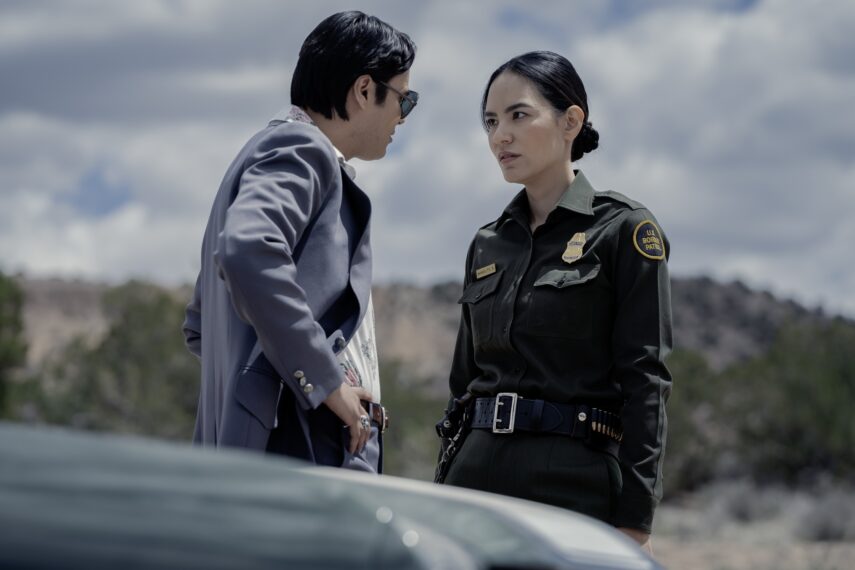
Jim Chee (Kiowa Gordon), who briefly walked away from the badge to work as a private investigator, returns to the force with renewed purpose—but also deeper scars. His relationship with Bernadette Manuelito (Jessica Matten) faces its toughest test yet as she begins her own journey hundreds of miles away. Now part of the border patrol, Bernadette encounters Tom Spenser (Bruce Greenwood), a powerful rancher with a menacing charm and dangerous secrets of his own. Their tense dynamic unfolds in parallel to Leaphorn’s investigation, weaving a tapestry of lies and loyalties that converge in the season’s explosive final episodes.

One of the biggest surprises of Dark Winds Season 3 is the addition of Hollywood legend Robert Redford, making his final on-screen appearance as a mysterious prisoner held in the Navajo police station. Redford, who also serves as an executive producer alongside Game of Thrones creator George R.R. Martin, brings an eerie gravitas to the role. His cryptic dialogue with Leaphorn hints at connections between past and present crimes, and at secrets buried far beneath the desert floor. In one chilling exchange, his character murmurs, “You can’t bury the wind, Lieutenant. It always comes back.” That single line encapsulates the season’s theme: that the sins of the past can never truly stay silent.
The supporting cast continues to shine with depth and nuance. Deanna Allison returns as Emma Leaphorn, whose quiet resilience masks a growing fear that her husband’s obsession will destroy what’s left of their family. A Martinez reprises his role as Gordo Sena, the weary police chief torn between duty and despair, while Jeri Ryan’s Rosemary Vines reemerges to face the fallout of her husband’s death in Season 2. Newcomers Raoul Max Trujillo, Tonantzin Carmelo, Alex Meraz, and Christopher Heyerdahl round out the ensemble, each bringing new energy to a story that thrives on moral complexity and emotional weight.
Visually, Dark Winds Season 3 is a masterclass in atmosphere. Filmed once again against the sun-scorched backdrop of the Navajo Nation, the cinematography captures both the majesty and menace of the desert. The wide, still shots of empty landscapes create a sense of isolation so thick it becomes another character. The pacing remains deliberately slow, mirroring the unhurried yet relentless march of truth. Every shot, every silence, feels intentional—forcing viewers to sit in the tension and absorb the moral gravity of the story. It’s noir stripped bare of glamour, leaving only dust, guilt, and the uneasy heartbeat of humanity.

But beyond the crimes and investigations lies something more unsettling—a secret that redefines the world of Dark Winds. As Season 3 unfolds, long-buried connections between Leaphorn’s family and the case begin to surface. The missing boys, the imprisoned stranger, and the sins of the desert intertwine in ways no one anticipates. The revelation in the finale—described by insiders as “a twist that changes the series forever”—reshapes not only Leaphorn’s life but the mythology of the entire show. It’s a moment of truth both devastating and transformative, the kind of storytelling that leaves audiences silent long after the credits roll.
When Dark Winds lands on Netflix this October, it won’t just bring a new season—it will bring a reckoning. Scattered clues, shadows from the past, and an unspoken secret all converge into a single storm of guilt and revelation. With McClarnon’s stoic brilliance leading the way and Redford’s haunting farewell performance, Dark Winds Season 3 cements itself as one of television’s most poetic explorations of morality and memory. The desert is vast, the silence endless, but the truth—like the wind—can never be contained.


