
To obtain a rich harvest of large potato tubers, it is necessary to provide them with high-quality nutrients, since potatoes require more nutrients than many other crops. This is due to the fact that a significant part of the nutrients is spent on the formation of dry matter, including starch.
Interesting fact! Did you know that you can determine the starch content of potatoes by how they cook? If potatoes cook easily, then they are low in starch. If they remain hard, then there is a lot of dry matter in their tubers.
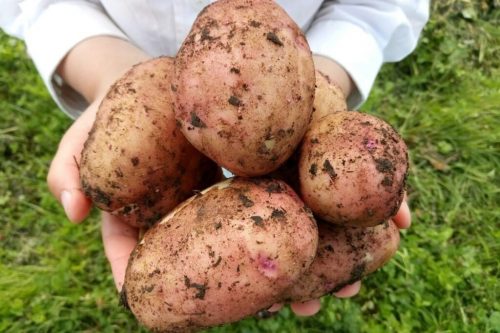
How to fertilize potatoes properly to get large tubers?
prerequisites for growth
For a good harvest, it is important to know not only about feeding, but also about the preferences of potatoes. This plant prefers cool weather and sufficient humidity.
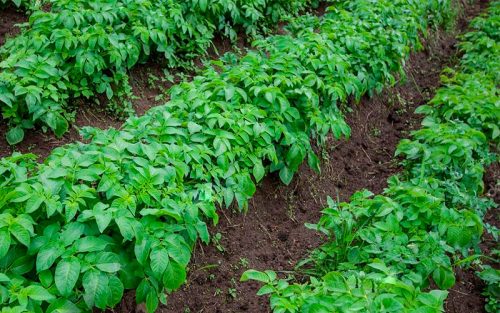
Floor
Potatoes grow well in loose and breathable soils. If oxygen does not flow to the tubers due to compacted soil, whitish growths can form on them through which pathogens can penetrate. In addition, tubers in hard soils can become deformed and lose their marketable properties.
Important! Strongly compacted soils can reduce potato yields by half. Humidity requirements. Excess moisture or a lack of moisture in the soil negatively affects yields. Excess moisture is harmful to potatoes: the plant can suffer from fungal and bacterial diseases, and the roots and tubers suffer from a lack of oxygen.
Lack of moisture is also harmful, because without sufficient moisture, potatoes cannot please with a good harvest, since 80% of the tubers consist of water.
Light
Potatoes do not grow well in the shade. In shady areas, the stems become elongated and the plant quickly turns yellow. Therefore, potatoes are always planted in open, sunny locations.
Now let’s discuss the feeding required to improve stolon growth and the formation of large tubers.
feeding
The main source of nutrients for potatoes is organic. It is applied directly to the hole when planting or added to the soil when plowing. Organic matter includes green manure, peat, humus and compost.
Organic soil is enriched with nitrogen, which contributes to the formation of strong tops. A strong green mass is important for tubers after flowering, when the potatoes direct all their strength to their growth.
To increase the yield of potatoes, mineral fertilizers are also used 2-3 times per season: before budding, during flowering and 10 days after it. Borogum-M is one of the effective means for this phase.
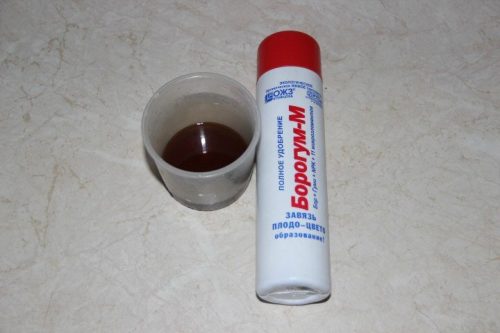
Preparation of the solution
Dilute 1 tablespoon of “Borogum-M” in 10 liters of water for spraying. The treatment is carried out in dry weather. This solution is enough for 30 square meters.
Self-feeding
To protect against Phytophthora, mix 20 g of superphosphate, 10 g of potassium salt and 2 g of copper sulfate in 10 liters of water.
To ensure a bountiful potato harvest, it is therefore important to provide the plant with the necessary conditions and to apply fertilizer in a timely manner.


