
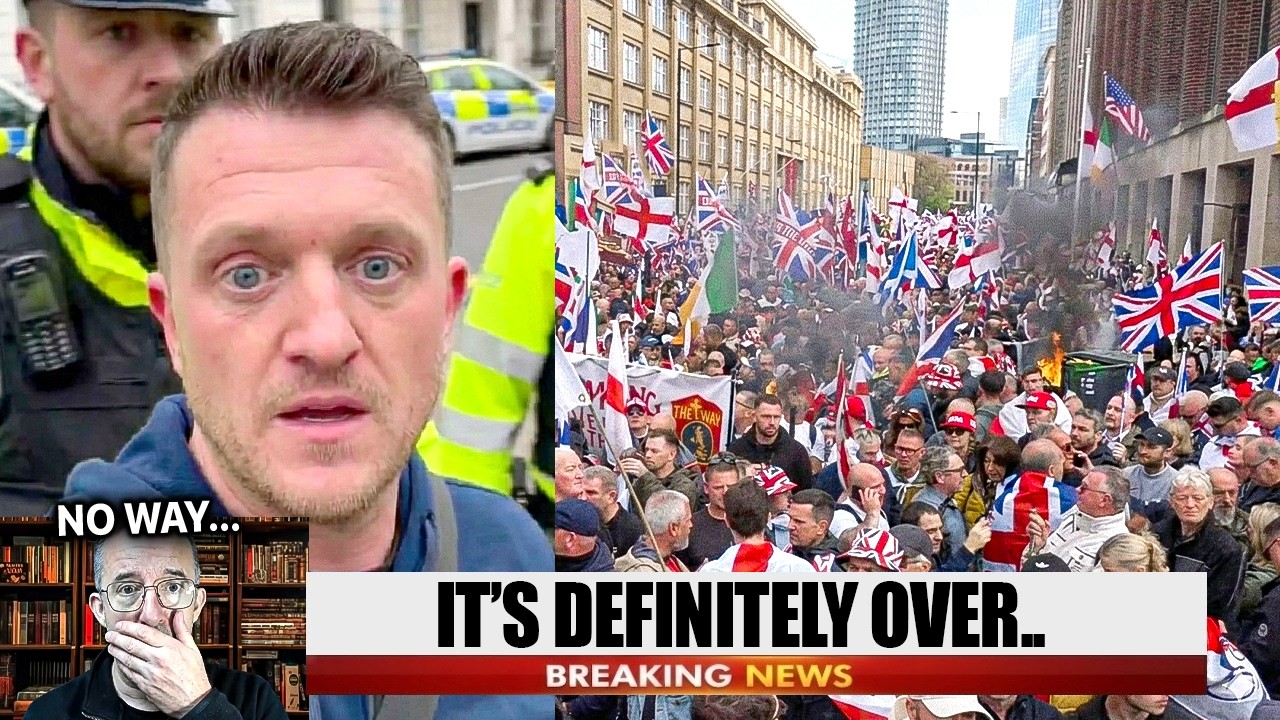
But what has truly ignited the controversy is the Prime Minister’s direct public intervention.
Opponents of the government argue that this marks a serious escalation, with some accusing Starmer of effectively encouraging suppression of lawful protest.
Starmer’s remarks trigger immediate backlash
Starmer’s language has spread rapidly across social media platforms, where critics have accused the government of using inflammatory labels to discredit political opposition. The Prime Minister’s remarks have also been seized upon by commentators who argue that the term “far-right” is increasingly being deployed not as a descriptive term for extremist ideology, but as a political weapon.
Supporters of the rally argue that the government is blurring the line between genuine extremism and public dissent, creating an atmosphere where ordinary citizens fear being branded as radicals simply for questioning policy decisions.
Some critics say Starmer’s framing of the rally sets a dangerous precedent: if a political leader labels a protest movement as extremist before it even happens, it may influence policing decisions, media coverage, and public perception.
Civil liberties advocates have long warned that protest rights can be weakened not only through legislation, but through political messaging that pressures institutions to treat certain groups as inherently illegitimate.
Protest rights and political messaging collide
The controversy has reignited long-standing tensions in Britain over the right to peaceful assembly. The UK has historically maintained strong traditions of public protest, but in recent years debates have intensified around policing tactics, restrictions on demonstrations, and the role of government rhetoric.
While the government has argued that public order measures are necessary to prevent violence and disruption, critics claim those same measures are increasingly being applied selectively, depending on which political movement is involved.
The latest dispute surrounding the Tommy Robinson rally has become a flashpoint for this broader argument. For some, it is no longer simply about one activist or one event — but about whether the state is now using security concerns to justify the political marginalisation of dissenting voices.
Claims of journalists and foreign figures being blocked
Adding further fuel to the controversy are emerging allegations that journalists and foreign political figures have been prevented from attending or covering the rally.
Although details remain unclear, the claims have circulated widely online, with critics suggesting that authorities are attempting to control the narrative surrounding the event by restricting international observation.
If proven, such actions could become highly politically sensitive, as foreign media presence often plays a role in ensuring transparency around policing and protest management.
Some observers argue that preventing outside scrutiny would intensify suspicion that the state is preparing to treat the rally as a threat rather than a lawful demonstration.
However, others have urged caution, warning that many viral claims surrounding political protests often lack verification and can be amplified for emotional impact.
Tommy Robinson responds with accusations of hypocrisy
Tommy Robinson has responded aggressively to Starmer’s comments, accusing the Prime Minister of hypocrisy and claiming that government leaders apply “two standards” depending on political ideology.
Robinson has argued that his supporters are being unfairly demonised, and that Starmer is attempting to portray working-class protestors as extremists in order to silence criticism of immigration, crime policy, and the political establishment.
His response has been widely shared among supporters, who argue that Starmer’s government is attempting to redefine political dissent as “hate speech” in order to justify suppression.
Robinson’s critics, meanwhile, argue that his past rhetoric and political associations make concerns about extremist participation legitimate, and that the government is right to warn against rallies that could inflame division.
The “hate speech” debate returns to the centre of British politics

The situation has also revived one of Britain’s most divisive political arguments: where is the line between hate speech and political disagreement?
Supporters of Starmer’s stance argue that public figures have a responsibility to warn against rhetoric that could contribute to social unrest or hostility toward minority communities. They insist that ignoring such events could normalise extremist movements.
But critics counter that the term “hate speech” has become increasingly vague and is now being used to suppress legitimate concerns about national policy.
This debate has been building for years, particularly as Britain has seen rising polarisation around immigration, identity politics, policing, and the role of the media.
The rally has now become a symbol in that broader conflict: one side sees it as a protest against establishment failures, while the other views it as a rallying point for dangerous ideology.
Fears of increased policing and protest restrictions
There are also growing concerns about how police will handle the demonstration.
Critics of the government claim that heightened political rhetoric from the Prime Minister could influence policing tactics, potentially leading to aggressive enforcement or disproportionate restrictions.
Protesters have expressed fears that authorities may use the justification of “public safety” to impose heavy controls, disperse crowds, or make arrests that supporters argue would not occur at other demonstrations.
These concerns come at a time when the UK has already faced criticism over protest laws and police powers, particularly in relation to large-scale demonstrations that disrupt public life.
Supporters of the rally argue that if policing becomes excessively restrictive, it will confirm their belief that the establishment is attempting to crush opposition movements.
On the other hand, police officials and government allies may argue that strict security is necessary, especially if intelligence suggests potential counter-protests or violent escalation.
A resurfaced clip deepens political anger
One of the most controversial elements driving online outrage is the resurfacing of older footage that critics claim shows Starmer previously welcoming controversial activists into Britain.
The clip has been circulated as evidence of what critics describe as double standards: that certain forms of political activism are tolerated or even encouraged, while other movements are condemned as extremist.
Those sharing the clip argue that Starmer is willing to defend controversial figures when it aligns with establishment politics, but uses harsh language when faced with domestic opposition movements.
Government supporters dismiss these claims as misleading, arguing that comparisons between different activist movements are often oversimplified and politically motivated.
Still, the resurfacing of such footage has become a powerful emotional weapon online, contributing to the sense among critics that political authority is being used unevenly.
Britain’s political divide grows deeper
The rally controversy highlights a growing reality in Britain: political division is no longer limited to Parliament. It is now embedded across society, amplified by social media, and increasingly framed as a struggle over fundamental rights.
For many supporters of the rally, this is not about Tommy Robinson alone, but about what they see as a wider pattern of establishment hostility toward dissent.
They argue that millions of citizens feel ignored on issues such as immigration, economic insecurity, national identity, and crime. In their view, the “far-right” label is now being used as a blanket accusation to discredit anyone who challenges government policy.
For opponents of the rally, the concern is equally serious: they argue that extremist rhetoric has become more normalised and that political leaders must actively challenge movements they believe threaten social cohesion.
This clash of narratives has become central to British political life — and the government’s response to the rally may shape public trust for years to come.
Wider implications beyond the rally
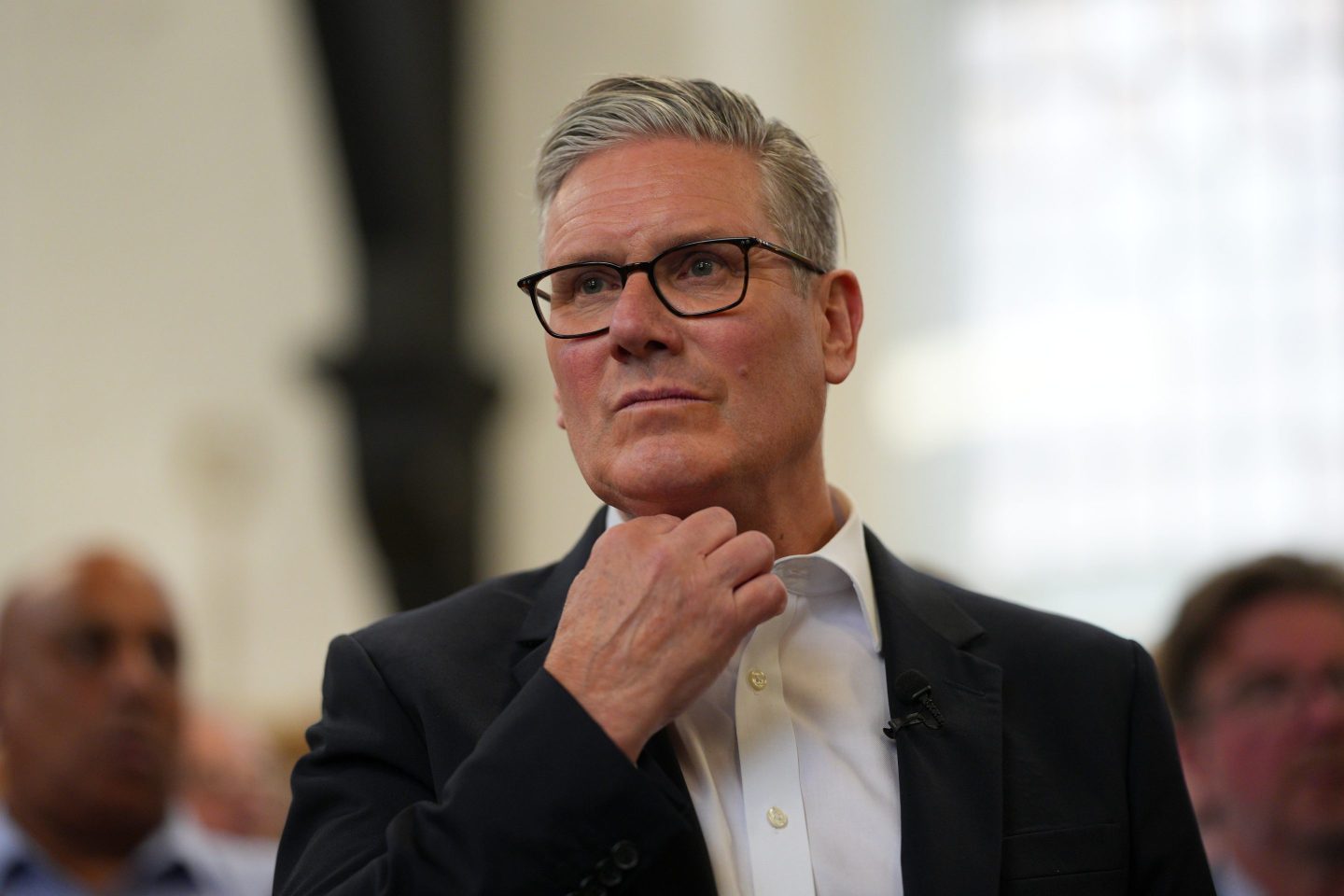
Political analysts note that the government’s handling of high-profile demonstrations can have lasting consequences.
If the state appears too heavy-handed, it risks validating accusations of authoritarianism and political repression. If it appears too passive, critics may argue it has failed to act against extremism.
Either outcome could deepen mistrust and polarisation.
Some observers believe that Starmer’s strong rhetoric reflects concern that public anger is rising and that protests like this could become a larger movement. Others argue it is simply a political strategy designed to define the opposition as dangerous and isolate them socially.
In either case, the debate has moved beyond the rally itself and now touches the foundations of democratic society: the right to protest, the boundaries of political speech, and the role of government in shaping public narratives.
Conclusion: a defining moment for protest politics in the UK
As the London rally approaches, Britain faces a tense political atmosphere. Starmer’s remarks have elevated the event into a national flashpoint, with critics accusing the government of attempting to suppress lawful assembly and supporters insisting the Prime Minister is simply standing against division.
What happens next — both on the streets and in the political aftermath — may determine whether this controversy fades quickly or becomes a major turning point in the UK’s debate over free speech and democratic rights.
For now, one thing is clear: the clash between government authority and protest movements is intensifying, and Britain’s political landscape is becoming increasingly volatile.


