
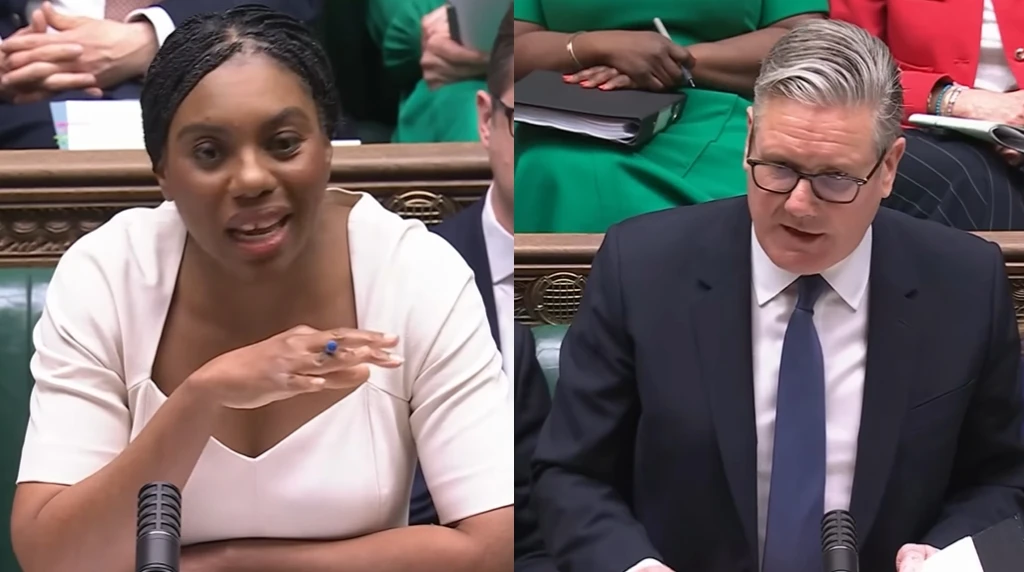
Political pressure on UK Prime Minister Keir Starmer has reached a boiling point during the latest Prime Minister’s Questions (PMQs), as Opposition Leader Kemi Badenoch directly called for his resignation. She accused him of misleading Parliament and endangering national security over the appointment of Peter Mandelson.
Fierce Dispute Over “Due Process”
At the heart of the clash was whether Downing Street followed full due process in appointing Mandelson. Badenoch repeatedly pressed the Prime Minister by citing advice from former Cabinet Secretary Simon Case in November 2024, which stated that “necessary security checks must be completed before confirming the Prime Minister’s choice.”
She argued that this advice was ignored, with Downing Street pushing ahead—securing royal approval and agreement from US authorities before the Developed Vetting (DV) process was completed.
In response, Starmer firmly defended his position, citing testimony from Olly Robbins: “For external appointments… it is normal for vetting to take place after the announcement but before formal appointment and assumption of duties.” He also referenced confirmation from Chris Wormald that “proper procedures were followed.”
Downing Street Pressure and Security Concerns
Badenoch intensified her attack, accusing the Prime Minister’s team of showing “disregard” for security vetting and even suggesting that Mandelson “did not need vetting.” More alarmingly, she claimed Mandelson was granted access to highly classified “strap material”—the highest level of sensitive intelligence—before completing the vetting process.
Security concerns were further heightened by due diligence findings that Mandelson remained on the board of Sistema, a Russian defense-linked company associated with the Kremlin, long after Vladimir Putin’s annexation of Crimea in 2014. Badenoch challenged him bluntly: “I don’t know what planet the Prime Minister is on… Why would he appoint someone with Kremlin links as our ambassador to Washington?”
Defending his decision, Starmer argued that as a member of the Privy Council and the House of Lords, Mandelson was permitted limited access to certain classified materials prior to full DV clearance.
He reiterated his core defense: that the UK Security Vetting body had identified “red flags” and recommended denying clearance, but that this critical information had been withheld from him. “That information should have been reported to me… the failure to do so was a very serious error of judgment,” Starmer said, pointing to failures within the system.
Calls for Resignation and Starmer’s Defiance
The session reached its peak when Badenoch declared: “He knows he did not follow the process, yet he told the House that he did… Everyone knows the price for misleading Parliament. Will the Prime Minister finally take responsibility and go?”
Despite the intense pressure, Starmer remained defiant. He accused Badenoch of “rushing to judgment” and making repeated errors in her claims.
Closing the session, he stated: “I was elected by the British people because they were let down by 14 years of failure. Whatever she says, whatever noise they make, nothing will distract me from delivering for our country.”
Starmer’s refusal to step down underscores an ongoing political survival battle at Downing Street, as the shadow of the Mandelson scandal continues to dominate the Labour government’s agenda and deepen the crisis of confidence at the heart of Westminster.


