
There is a secret ingredient that, when poured under cucumbers, makes them grow numerous and lush. What ingredient are we talking about?
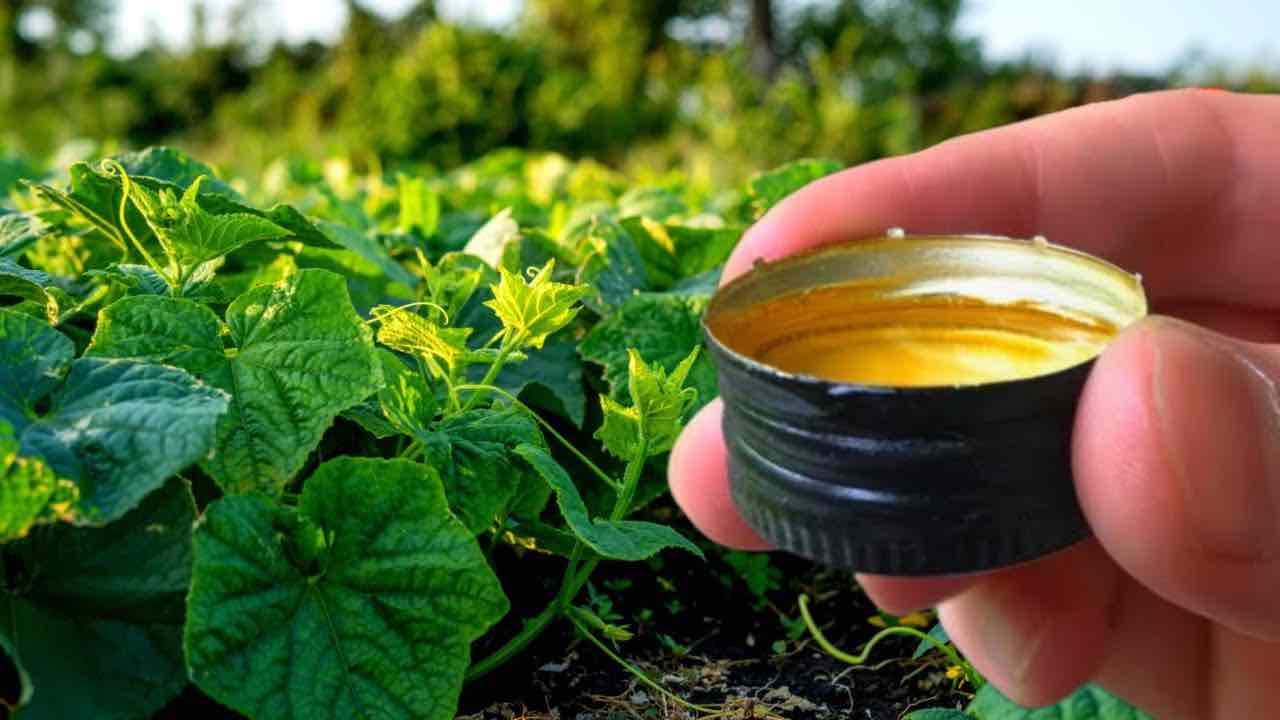
Proper feeding of cucumbers is an essential step to ensure a successful harvest.
Neglecting this phase can result in stunted plant growth and slow development, resulting in the production of unsatisfactory fruits unsuitable for salting, poor taste and twisted shape.
To ensure optimal growth and development , it is important to understand how and what to properly fertilize cucumbers.
When nitrogen is scarce, it is often visible through the leaves of the plants, which take on a pale green hue, and the fruits become small and pointed.
In addition, the growth of the plant tends to slow down and the roots undergo progressive deterioration.
When the soil is deficient in potassium, cucumbers become susceptible to a variety of diseases, resulting in bronze-colored leaves and a noticeable brown border around the edges .
The presence of light green spots on the lower leaves of a plant is a sign of magnesium deficiency. If this deficiency persists, the leaves will turn yellow and eventually break off the plant.
Low yield of cucumbers may be due to a delay in their ripening, possibly due to a lack of manganese.
However, if this element is present in sufficient quantities, cucumbers undergo a process of intensive respiration and effectively absorb important nutrients .
Cucumbers: When should they be fed?
Knowing when to feed cucumbers is important to ensure optimal growth and yield. It is better to fertilize cucumbers two weeks after planting and once a month thereafter.
Cucumbers should be provided with food at certain intervals. The first feeding is carried out after sowing in the ground for a period of two weeks.
The second feeding should be carried out as soon as the cucumbers have bloomed. The moment when the plants begin to bear fruit marks the third feeding period .
The last one, carried out by gardeners interested in extending the life of their plants, is the fourth and final stage of the feeding process.
What is needed for nutrition?
Um Ihre Gurkenpflanzen richtig zu ernähren und zu pflegen, müssen bestimmte spezifische Anforderungen erfüllt werden. Erstens benötigen Gurken eine konstante Versorgung mit Nährstoffen, insbesondere Stickstoff, Phosphor und Kalium.
Darüber hinaus benötigen sie einen gut durchlässigen Boden, der reich an organischem Material ist, wie z. B. Kompost oder gut zersetzter Mist. Richtiges und konstantes Gießen ist notwendig, da Gurken empfindlich auf Trockenstress reagieren.
Schließlich ist es wichtig, nach Schädlingen und Krankheiten Ausschau zu halten, die Gurkenpflanzen häufig plagen, wie Gurkenkäfer und Mehltau, und geeignete vorbeugende Maßnahmen zu ergreifen, um eine gesunde und produktive Ernte zu gewährleisten.
Wenn es um die Fütterung von Pflanzen geht, kann es sehr vorteilhaft sein, sich auf traditionelle Heilmittel zu verlassen. Einige der leistungsstärksten Lösungen für diesen Zweck sind:
- Eierschale erwies sich als hervorragende Nährstoffquelle für Gurken. Dieser Dünger besteht zu 95% aus Kalziumkarbonat, das vom Pflanzenorganismus leicht aufgenommen wird. Darüber hinaus enthält die Schale eine Fülle von essentiellen Nährstoffen wie Magnesium, Phosphor, organische Proteine und Kalium, die zur Anreicherung des Bodens beitragen.
- Holzasche ist ein besonders nützlicher Rohstoff sowohl für die Schädlingsbekämpfung als auch für die Vorbeugung von Pflanzenkrankheiten. Seine Wirksamkeit ist besonders während der Blütezeit von Gurken und dem Auftreten von Früchten bemerkenswert;
- Zwiebelschalen können Gurken Hilfe im Kampf gegen Krankheiten und Schädlinge bieten. Sie wirken sich auch positiv auf die Fähigkeit von Gurken aus, sich an unterschiedliche Umweltbedingungen anzupassen. Um Gurken zu füttern, machen Sie einen Sud mit Zwiebelschalen. Dies kann erreicht werden, indem 100 g Zwiebelschalen in 1 Liter warmem Wasser gekocht und dann abkühlen gelassen werden, bevor sie als Gießlösung verwendet werden.
Andere Fütterungsmethoden
Die Verwendung von Gülle als Dünger ist für diejenigen, die eine qualitativ hochwertige Ernte anbauen möchten, von entscheidender Bedeutung.
Es ist jedoch wichtig, vorsichtig zu sein und einen übermäßigen Einsatz von organischen Düngemitteln zu vermeiden, da dies zu Überwucherung von Sträuchern und zur Bildung von Lücken im Inneren der Früchte führen kann.
Die Stimulierung des Wachstums von Sträuchern und Früchten kann auf das Vorhandensein von Hefen zurückgeführt werden. Das liegt daran, dass Hefe lebenswichtige Spurenelemente wie Stickstoff, Phosphor und Kalium enthält, die für die Ernährung von Gurken unerlässlich sind.
However, it is important to ensure that the yeast solution is applied correctly. This should be done from mid-May to the end of summer, when the soil has warmed up considerably.
Potato peels are a valuable source of organic acids, fats, potassium, starch , vitamin C, glucose and salt.
When added to the soil, they significantly enrich its composition. In addition, during decomposition they generate heat, which promotes the growth of cucumbers .
However, it should be noted that potato peels also attract pests such as snails and Colorado potato beetles .
While this may seem like a disadvantage, it can be turned into an advantage by using them as bait to detect and eliminate these crop-damaging pests .
The use of folk remedies for feeding cucumbers has numerous advantages. These remedies are both affordable and easily accessible.
When it comes to providing nutrients to tomatoes and cucumbers, eggshells are much more effective than chemical alternatives sold in garden stores, while also being safer to use.
Popular spices have been tried and tested for years and have never failed, unlike prepackaged preparations that cannot guarantee the same success.
The best food for cucumbers? Eggshells
Cucumber farmers can benefit from using eggshells as a source of valuable trace elements.
These peels contain an abundance of useful substances and essential trace elements that are easily absorbed by cucumbers.
As a result, these microelements promote healthy growth and help cucumbers withstand difficult environmental factors .
Before eggshells are used as a food source, the shells should undergo a preparation process that includes washing, drying and thorough crushing.
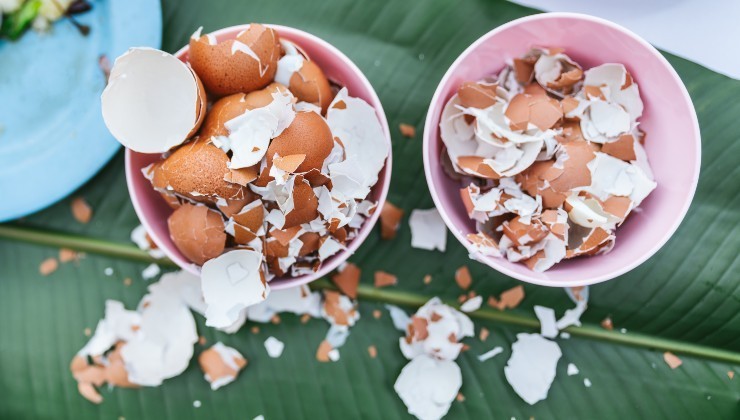
This can be done by using a meat grinder, meat mincer or mortar. Attempting to break eggshells manually is a challenging and not recommended endeavor.
The usefulness of larger pieces of shell is reduced compared to shredded ones. In addition, shells that are too large run the risk of being damaged during weeding .
After the eggshell has been processed and ground, the fertilizer is now ready.
Next, the powder produced should be sprinkled under the roots during the weeding process .
This way, the crushed eggshells mix with the soil. This simple step completes the process.


